Grief, Spirituality

Walking Toward Love

A Friendship in Ten Movements

1–2 minutes
Jeffrey Noel Draine, 1962 – 2025

The world lost a good one this month, when, at the age of 62, Jeff Draine went home to the God he loved after eleven years living and dying with Alzheimer’s. (You can read his beautiful obituary here.) Jeff was the first friend I made as a full-blown adult. After college graduation, I moved into the Freedom House community in Richmond VA, where Jeff and I overlapped for just a week. He left briefly to run a local day care center but soon returned, moving into the bedroom next to mine. (Our headboards each backed up to a connecting door, upon which I frequently pounded when Jeff’s thunderous snoring awoke me. “I dreamed the house was falling down again,” he would say.)

Neither of us would have suspected, in those early days, that we would be friends forever—let alone family—and we certainly never envisioned that I’d be one of the last people to kiss that big head of his before he died. But there you have it. We wound up walking together for thirty-eight years, all the way to the end of his road. Here then, in honor of Jeff, is a “top ten” list of sorts: ten movements that capture our ever-shifting relationship. I hope this chronicle of how one friendship endured and evolved over time will speak to your own uncategorizable loves. Cherish them!

Continue reading “Walking Toward Love”
Picture of a Goat
Book Tour, Retreats, Spirituality, Travel, Writing

Sneak Peek: So Many Goats!

As I’ve been playing “what-were-we-doing-two-years-ago” all month, so many profound and silly memories have surfaced. Here’s one of the latter, told as part of Chapter Forty, “La Cova.” It takes place on the evening of October 30—the day after what we thought had been our final hike, from Montserrat to Manresa. Enjoy!

At three-thirty that afternoon, Fr. José told us, we were to meet in the garden to walk to Mass at Our Lady of Good Health. We should be sure to wear our boots, he added, and bring our hiking poles. Oh, good grief, I thought. How are we not done with those? And why are we hiking to Mass when there are more chapels than I can count right here in our residence?

The hour’s walk took us through the old town and surrounding commercial district, then onto a rocky path through the fields beyond. I will confess, I was grumpy.

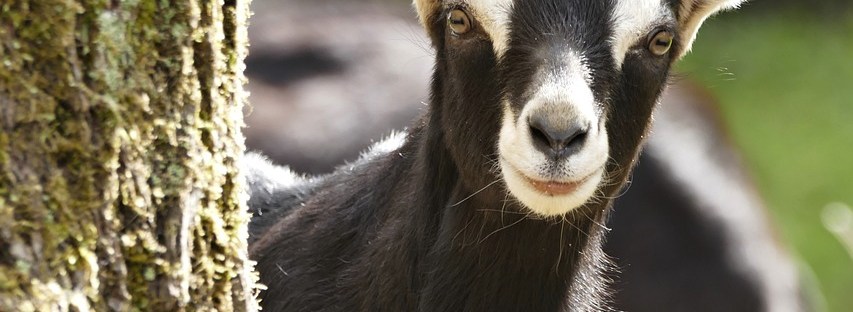
My mood lightened when I discovered that we’d be sharing the road with goats. In the field beside us strode an actual goatherd—wearing sandals, carrying a crook, and accompanied by a frisky dog. (A twenty-first-century goatherd, he was also wearing jeans and a camo baseball cap, but still, it was pretty cool.) Close on his heels were at least fifty goats of varying colors and sizes, each sporting a noisy bell. As we hustled forward, the goats followed, kicking up a cloud of dust behind us until our ways diverged.

The surreal goat encounter banished what was left of my petulance. And, of course, the walk was worth it. Santa Maria de la Salut is a tenth-century hermitage. Preserved in the entryway is a rectangular slab identified (in Catalan, English, and French) as “the stone where Saint Ignatius knelt down on his visits to this sanctuary.”

How is it that a hunk of rock touched by Ignatius’ knees has been preserved for five hundred years? Fr. José explained that the ordinary people of Manresa kept Ignatius’s memory alive, realizing that they had been in the presence of a holy man. According to Tellechea Idígoras’s biography, when the saint’s canonization process was opened in 1594—seventy-two years after his sojourn in Manresa—many testified to the lasting impression Ignatius had made on them or on their parents and grandparents. Perhaps that’s why he continues to feel so present in this place.

As daylight was no longer being saved, the sun had dipped below the horizon already by the time we finished Mass. We started back at a good pace, hoping to reach the paved roads before dark; nevertheless, we had to navigate the treacherous end of the rocky path by flashlight. At last, we reached the bright Burger King and KFC signs on the outskirts of the city—a sharp contrast to the millennium-old hermitage and timeless goatherd. Like many of the towns we visited, Manresa is a place where the past and present coexist.

After dinner, we gathered for our final reflection . . .

Coming January 14, 2025 from Paraclete Press
Spirituality, Writing

Finding God in Sugar-Covered Strawberries

Finding God Abiding comes out three months from today. To celebrate, I’m sharing a chapter which one of my early reviewers told me she loved–despite initially having NO desire to read it, because of the sappy title. (Pun slightly intended.)

Enjoy . . . and kindly consider pre-ordering your signed, personalized copy, which helps me in a lot of behind-the-scenes ways.


Chapter 21

Love never ends. — I Corinthians 13:8

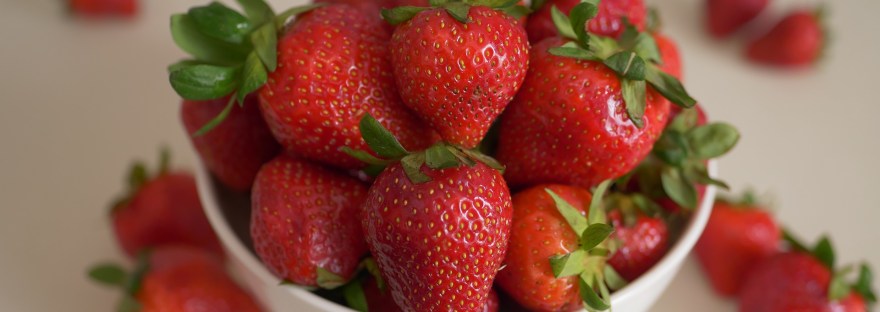
When I was little, my grandmother taught me how to eat a strawberry: after removing the leaves, spear berry with fork, plunge directly into open sugar bowl, pop in mouth, repeat. (It took me years to realize I shouldn’t eat them that way in public.)

Even without the added sugar, my grandmother brought sweetness to so many of my early memories. As the oldest grandchild, I enjoyed the youngest version of her: the grandmother who zipped around town in a Chevy Vega (hot orange, no less), who was always game for a boardwalk roller coaster, and who kept her kitchen stocked with Pepperidge Farm cookies and strawberries ripe for the bowl.

It wasn’t that she’d never known sorrow. In fact, Gram had seen more than her share. Her baby brother perished in World War II and her only son died in his crib. In her fifties, she lost her mother to breast cancer and her husband to cardiac arrest within six weeks of each other. Yet, somehow, those losses didn’t leave a shadow—at least, not one her grandchildren could see. Even after a broken hip at age seventy rendered her fragile, she remained classy, funny, and generous. (“Now, get something you really want,” she always said when taking someone out to dinner; she didn’t want us ordering pizza instead of prime rib just to save her a few pennies.)

The shadow didn’t appear until she turned eighty, when Alzheimer’s began to wage its insidious campaign against her personality. She suffered its assault for seventeen years, dying at age ninety-seven in my aunt and uncle’s home, where she’d lived since it became clear she could no longer be alone.

Hers was a fate most of us dread, yet what strikes me now is how much good Gram continued to do. During those awful years, Gram’s illness became a hub around which many lives revolved, as relatives rallied to provide company and care. For her funeral service, we selected the First Corinthians reading about love because so many of us had become more patient and kind, less self-interested and record-of-wrong-keeping for having been part of the family during Gram’s final years. She lived those virtues until the Alzheimer’s took her volition, at which point she inspired them. The care that flowed back to her was a return of the tide, a response of love to one who had been so steadfast.

Gram’s impact in her decline was not limited to immediate family. One summer during our shore vacation, she was in a phase where she would read aloud anything put in front of her—from fine literature to toothpaste ads—so my mother had packed a book of daily meditations by one of Gram’s favorite saints, Francis de Sales. I spent many afternoons cross-stitching on the couch while she read those beautiful words (and page numbers, and running headers) in her oddly monotone voice. They sank in.

By the end of the two weeks, I had designed a plan for college students to use that book—and, subsequently, others in the series—in a month-long spirituality program that eventually won a national campus ministry award. Each time we ran the program, I made sure my students knew it had been inspired by my grandmother, Mary Florence Reilly: an octogenarian with Alzheimer’s whom God was still using to sweeten everyday life.

Many of us have a great fear of outliving our “usefulness,” but loving my grandmother taught me to measure life’s goodness differently. Whom do you cherish, just for who they are? Bask in imagining being so cherished yourself.