Last week, I was caught in afternoon traffic driving home from a retreat. When the school bus ahead of me reached a red light, two little girls flattened themselves against the back window. How cute, I thought—followed by, Why do we let this precious cargo ride like loose eggs in a box? Both thoughts were chased from my mind, however, when that precious cargo began mugging and gesticulating at me. Whacky faces, strange hand gestures . . . what the heck?!?
Kids today, I muttered, striving to keep my eyes averted and my face impassive.
I don’t know what made me peek at the girls again. (Holy Spirit, perhaps?) When I did, I noticed that they weren’t trying to get my goat; they were trying to get me to play Rock-Paper-Scissors! I grinned, made eye contact, and gave the familiar one-two-three hand gesture. They jumped with delight, and we got three rounds in before the light turned green and I needed my hands back. We continued to play at every light until our paths diverged and we had to wave goodbye.
Rock crushes scissors (in case you didn’t know)
This month, my IVC Virtual Community is reading a chapter of Greg Boyle’s Cherished Belonging called “The Blindfold.” That’s Boyle’s image for whatever prevents us from seeing one another as God sees us. “When this blindfold falls,” he says, “we focus on what is precious in the soul of the person in front of us” (p. 65).
When this blindfold falls, we focus on what is precious in the soul of the person in front of us.
Playing Rock-Paper-Scissors with those precious girls was (in the words of a woman I met at my American Pilgrims on the Camino gathering last week) the kind of “joy snack” that could keep me going for the rest of the day. I had been judging the kids’ behavior so harshly, on so little information. I’m glad the blindfold dropped in time!
Wishing you at least one eye-opening experience this week.
Christine
P.S. Typing the phrase “get my goat” above made me wonder about the origin of that expression. Curious? NPR has your answer!
When Porter and I decided to take Via Rail across Canada, we had no doubt we’d enjoy ourselves. We love train travel, and the sleeper-car experience was a real “bucket list” item for each of us. I was a little worried about how I’d handle the absence of WIFI on the Canadian, but mostly I was just curious about the outer and inner journeys. Here’s what I discovered . . .
Large Vistas and Small Spaces
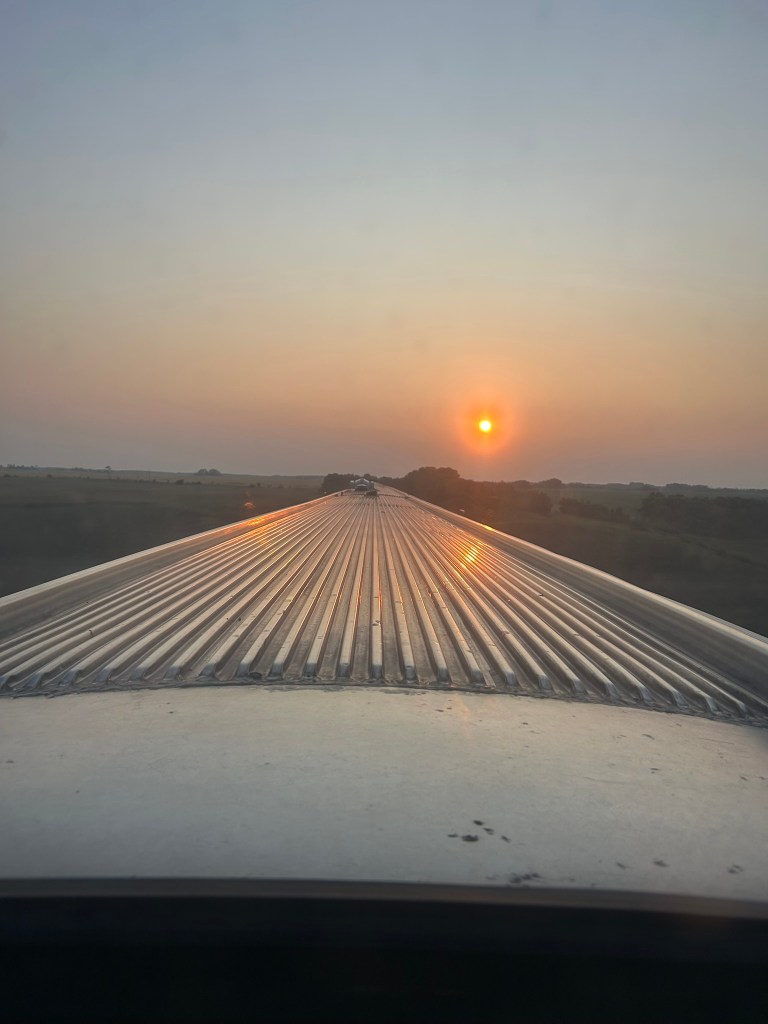
Canada is vast. The province of Ontario takes two days to traverse by train, with nothing but evergreens and lakes flying by the window. Manitoba and Saskatchewan come next, all prairies and farmland. Then it’s Alberta, gateway to the Rockies, which are so much bigger than my east coast existence prepared me for. Across Alberta then into British Columbia and down through Washington, we beheld forests, mountains, and even glaciers of enormous proportions. Everything was gorgeous. It was hard to peel my eyes away.
And yet, the snug scale of train life was also a pleasure. Even though we’d packed lightly for the extended trip, we could only bring into our compartment the things we absolutely needed on the train. Comfy clothes, in layers. A few books and crossword puzzles. Toiletries. Travel mugs. The compartment provided enough nooks and hooks for us to have a place for everything. It felt like a small private room in a (gently rocking) retreat house. We could venture over to the dining car, lounge car, and dome car, but that was the extent of our world for four days. I was blissfully content.
In my last blog post, I reminisced about mornings at the Jersey shore before laptops and smart phones, when “I’d rise first, slip out of our room, brew the coffee, head to the deck, pray and/or journal, then get comfortable with whatever novel I was reading. Presently, the sliding door would open and there would be Mom, coffee in one hand, novel in the other.” Mornings on the train were remarkably similar, except I’d take the thermos of coffee I’d prepped the night before to the darkened dome car and pray while watching the train’s headlights illuminate the landscape ahead. Presently, Porter would slide into the seat next to me so we could watch the sun transform the pre-dawn sky together. It was a beautiful reminder of God’s slow and steady work, even in the darkness of our lives.
“Have one of my books reviewed in America Magazine” was something I didn’t even know was on the professional bucket list until it became a possibility.
Several months ago, a friend who occasionally writes for America asked them if she could contribute a review of Finding God Along the Way, only to learn that it had been assigned already—to a stranger! (By which I mean, one of their regular contributors, with whom I happen to be unfamiliar.)
Cue the nail-biting. What would someone who didn’t already know me—who didn’t already like me—have to say about my writing? I’ve seen even bestselling books by well-known authors get taken down a notch by America reviewers. Would this one feel compelled to toss in a few critical observations just to prove her own writerly bona fides?
And when would it appear? I eagerly checked January’s issue (publication month) and February’s (which included IVC’s impressive annual Impact Report—a logical connection). Perhaps it would appear in March, when I was giving so many pilgrimage-themed Lent retreats? When April and May slid by as well, I stopped thinking about it. Maybe the fact that my book was assigned a reviewer was no guarantee said review would appear in print.
Then out of the blue on Friday morning, a text from Lexa Hall, my wonderful marketing contact at Paraclete Press: Did you see the review? Check your email!
Was I thrilled or crushed? Click the image below to read for yourself!
My book is in the wild, so you know what that means . . . It’s podcast season! I’m grateful to my friend Mary Fran Bontempo for being first out of the gate with this fun conversation. Click the image below to listen.
Note: Mary Fran’s latest book, From Broken to Brilliant, made my 2024 list of Books I Love by People I Love. Check it out!
When you sing in a church choir and Christmas falls mid-week, you know you’re going to be spending a lot of time in church: Christmas Eve and/or Day (possibly multiple services); then Saturday and/or Sunday; and then—if you’re Catholic—the Solemnity of the Blessed Virgin Mary, Mother of God. That’s right: on New Year’s Eve/Day, we have a holy day of obligation honoring the woman who convinced her son to makemore wine for a party. (And people say the Church doesn’t have a sense of humor.) This pitches us into another weekend, after which even people who’ve had the whole two weeks off are firmly back at work and you’ve been to church like 72 times.
Not that I’m complaining. Really! These liturgies celebrate things that are profound and powerful and—if you’ll pardon the bumper sticker wisdom—the reason for the season. But that’s not the only thing we’re doing in church these days. Christmas, as it turns out, is also a season for funerals.
Sometimes that’s because people go “home for Christmas” (in the words of a Steven Curtis Chapman song that should come with a pack of tissues) or hold on for one last holiday before letting go. Other times, a loved one has died weeks or even months earlier, and family is spread across the country, and this is the best time to bring everyone together.
We had two funerals at St. Vincent’s this week. The first was for the matriarch of a large family, whose husband we buried earlier this year. With a full church and two pews’ worth of grandchildren looking on, her three handsome sons stood at the ambo and wept their way through the eulogy. It was beautiful.
The second was for a woman who had been living in a nursing home for many years, who died two weeks shy of her 100th birthday. She had one mourner: a niece in her eighties. And yet we cut no corners. The five-person bereavement ministry team and other parish staff were there; two of them sat with the niece and found each song in the hymnal for her. We did all the music. Our pastor gave a full-blown homily. It was beautiful.
It’s like eternity in a snow globe.
There is something deeply poignant about a Christmas funeral. It’s like eternity in a snow globe. The light of the paschal candle glows in the twinkle of hundreds of tree lights in the sanctuary. The casket or urn rests just a few steps from the babe in the hay. And above it all looms the crucifix—which at St. Vincent’s is a mural that includes the Blessed Mother reaching for her son, as she does in the manger tableaux below. Birth and death and the promise of new life, all together in that one holy space.
Just before Christmas, the Catholic Faith Network interviewed me about my forthcoming book. While I’m always happy to talk about Finding God Along the Way, maintaining “eye contact” with the red dot at the top of my screen as instructed was challenging! How’d I do?
I’m grateful to the good folks at the Jesuit Media Lab for proposing a music-themed take on Advent, for inviting me to submit a reflection, and for making it the first post of the season! (And if you haven’t subscribed yet, I encourage you to. Up next: NPR’s Scott Detrow on “Hark! The Herald Angels Sing.)
Two Sundays ago, I had the privilege of preaching at First Presbyterian Church of Haddonfield, NJ. It was Consecration Sunday, when members submit their tithing pledges for the year ahead. Pastor Marvin Lindsay had invited me to preach on gratitude and/or generosity, and said I could choose my own readings. (What a treat!)
I selected Proverbs 3:1-10 (“Trust in the Lord all your heart…”) and Mark 6:45-52 (Jesus walks on water), and titled my sermon “The Parable of the Basset Hound” after my of my nephew-dogs, Hank. Here’s the pivot point of the lesson:
“I am sure that every person in this room is grateful for God’s many blessings in our lives. But the question is: Does our gratitude for what God did yesterday inspire trust for what God will do tomorrow, or do we just panic all over again like a pack of church-going Basset Hounds?”
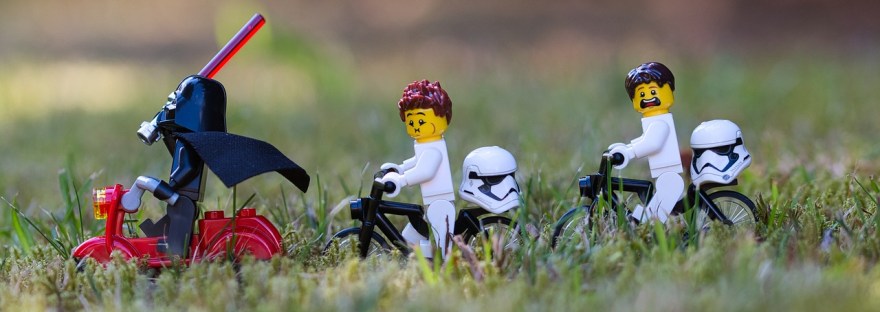
I have been enjoying your weekly emails since my friend Rob McChesney brought them to my attention last summer. You have such a deft touch, using small, potent images—a pile of Legos, a burnt pot, a smoke detector—to lead the reader to a moment of spiritual insight. They are like the best kind of daily Mass homilies!
It isn’t often that we get such a clear date stamp on the beginning of a friendship. But since emails are one of the few things I hoard (over 26K in the inbox and counting), I was able to find this gem. I’d been following Eric Clayton’s weekly emails on behalf of the Jesuit Conference (where he is Deputy Director of Communications) since the pandemic summer of 2020, but it wasn’t until the following May that I worked up the nerve to email him, complimenting his writing and sharing my own. Despite obvious demographic differences (he’s a father of young children, for starters), our mutual delight in mining the events of everyday life for spiritual truths led to the discovery of many other shared experiences and enthusiasms.
Eric A. Clayton
Eric is one of the most faithfully prolific writers I know. Those weekly columns keep coming, always using a simple image to unlock a spiritual insight. In 2022, they finally got a name: “Now Discern This.” (You can see them all and sign up here.) He also has a robust presence on Substack, where his “Story Scraps” cover all sorts of topics, including short fiction.
And then there are the books. In 2022, he published Cannonball Moments: Telling Your Story, Deepening Your Faith, about which I said (among other things), “Using the lens of storytelling, Clayton helps each reader mine the riches of their own story, connecting them with the one great story of God as experienced through saints and strangers, grandmothers and toddlers, ordinary life and extraordinary dreams.” This year saw My Life with the Jedi: The Spirituality of Star Wars, which I confess sits on my shelf unread because I feel a compulsion to watch all nine movies first—in order. (If he’d published a book on the spirituality of Star Trek, Battlestar Galactica, or LOTR, I’d have downed it by now.) This week, I preordered his latest, Finding Peace Here and Now: How Ignatian Spirituality Leads Us to Healing and Wholeness, coming in May 2025. Three books in four years; way to go, Eric!
Our mutual delight in mining the events of everyday life for spiritual truths led to the discovery of many other shared enthusiasms.
Eric has been so helpful in linking me to the wider Jesuit world: posting on the Conference website my article about the Ignatian Volunteer Corps; interviewing me on the AMDG Podcast, and inviting me to write for their Advent series for the last three years. (BONUS: click here to sign up for the new series, “Waiting and Wassailing: Daily Advent Meditations on Story and Song,” coming December 1 to an email near you.)
The most life-changing connection, however, was when Eric welcomed me to the Jesuit Media Lab’sIgnatian Creators Summit. During the last two summer gatherings, I’ve formed friendships with so many people who are using their manifold gifts—in writing, art, theater, film, photography, music, podcasting, and more—in the spirit of St. Ignatius, for the greater glory of God. (It was at the first of these Summits that I finally met Eric in person; at the second, I learned what a wicked-competitive card player he is!)
Here’s what Eric had to say about Finding God Along the Way: Filled with warmth, humor and a voracious eye for detail, Finding God Along the Way is Christine Eberle’s invitation to each of us to embark on our own inner pilgrimage. Along the way, Eberle promises to help us discover God in places both surprising and familiar. While we can’t all hop a flight to Spain, we can all journey deeper and deeper into our own selves, into those hidden recesses of our very souls, where God waits with delight. By inviting us into key scenes from her own Ignatian pilgrimage, Eberle masterfully weaves stories that both transport us to the land of St. Ignatius while also keeping us grounded in the spiritual reality of our own present lives. If you’re looking for an adventure into the soul, this is your book.
For a kindred spirit whose talent and productivity are equally matched by his kindness, generosity, and humor, I am truly grateful!
As I prepared to walk the Ignatian Camino—knowing I was planning on writing about it—I tried not to read many other Camino memoirs. I wanted to reach my own insights, free from the risk of parroting someone else’s. I made an exception, however, for Irish Jesuit Brendan McManus’ marvelous work, The Way to Manresa: Discoveries Along the Ignatian Camino.I’m so glad I did!
Brendan McManus, SJ
The book narrates the experience of a priest who had walked the Camino as a young man and set out to do it again after an exhausting stint of suicide-bereavement ministry. His hopes were thwarted when he fell and sustained a serious injury on the second morning of his solo journey. He pressed on (with the approval of a medical center) for several days until pain forced him to abandon the walk. He used public transportation to visit highlights of the Way before returning home, where the search for answers continued.
While it may be hard to imagine getting a whole book out of a pilgrimage cut off at the knees (no pun intended) on Day Two, McManus’ account of the spiritual wrestling match brought on by pain and disappointment makes this a worthwhile read for anyone dealing with an unexpected and unwelcome turn of events.
McManus’ account of the spiritual wrestling match brought on by pain and disappointment makes this a worthwhile read for anyone dealing with an unexpected and unwelcome turn of events.
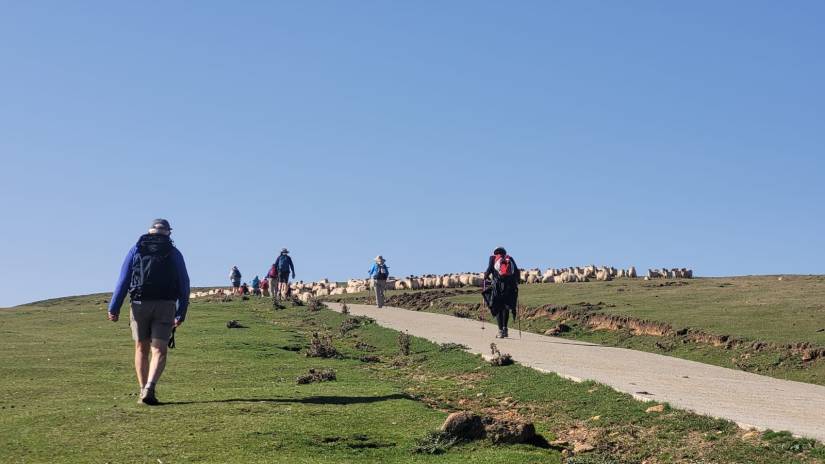
I later learned that Fr. McManus is a prolific author, and that most of his books have to do with the “other” Camino—the famous one, the Camino de Santiago (Way of St. James). He is currently based at the Manresa Spirituality Center in Dublin, but spends time each summer back in Spain, supporting other pilgrims through the Camino Companions program.
His latest book, co-written with Katherine O’Flynn, FCJ, is called Living the Camino Back Home: Ignatian Tips for Keeping the Camino Spirit Alive. Publication date is December 5, but if you’re free tomorrow afternoon (Friday, November 15, 2:00 Eastern) you can see McManus in conversation during a live book launch event. I just registered (at no cost) and hope you will too!
Brendan McManus could not have been kinder or more encouraging when I reached out to him about my book. Here’s what he said:
Christine has done a wonderful job of distilling the essence of pilgrimage and integrating Ignatian Spirituality into a wonderfully engaging narrative. With a lovely light touch she manages to capture the daily struggles and challenges (bags, beds and blisters!) that make for the essential inner journey that mirrors the outer journey in Ignatian Spain. This book beautifully illustrates Ignatian themes of trust, freedom and listening to the Spirit. A great Ignatian pilgrim read!
For this living witness that “everything has the potential to call forth a deepening of our life in God” (a la Ignatius), I am truly grateful.












 Christine Marie Eberle