

Spirituality, Writing

Habemus Papam!

Where were you when Pope Leo XIV was elected? How did you react? Busted Halo solicited a group of writers to answer that question in 300 words or less. Loving a tight word limit, here’s what I wrote:
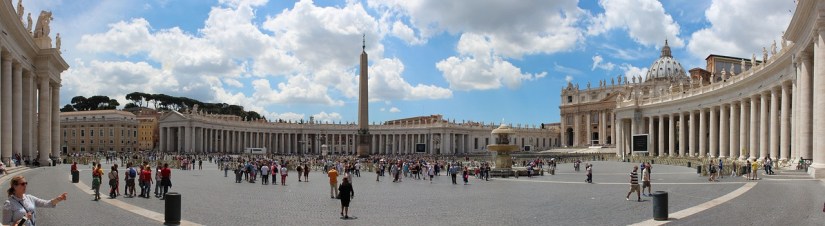

“I assumed you were dead,” my brother said. What other explanation could there be for my silence following his 12:12 text (White Smoke!) and 1:16 follow-up (American Augustinian! Villanova grad!)?

Blame it on the weather. After five drizzly days in Maine — where my husband and I had come to ready our summer cottage for the season — the sun appeared and we plunged into garden cleanup, sans phones. I remember glancing at the Catholic church across the harbor, thinking, “If we get a new pope, I wonder if they’ll ring the bells?” (Apparently not.)

At 1:50, I wandered inside and discovered my blown-up phone. Calling my brother — a graduate of (then) Augustinian-run Msgr. Bonner High School outside Philadelphia — I got an earful about Pope Leo XIII and Catholic Social Teaching. Too much too soon! Where was the time machine that would whisk me back 98 minutes to watch the announcement in real time?

Oh, there it was, sitting on the kitchen table. I opened my laptop, pulled up YouTube, and watched David Muir and Fr. James Martin receive and react to the astounding news.

Since then, I’ve been riveted by a litany of personal connections to the new pontiff. My mother taught theology at Bonner for 25 years; there’s a photo of Fr. Prevost visiting during her tenure, which means Mom (now gone to God) probably met the pope. In college, he worked as a groundskeeper at the cemetery where my grandparents are buried. A friend at Merrimack met him several times. And don’t get me started on people from Chicago!

In Cherished Belonging, Fr. Greg Boyle writes about God as Meister Eckhart’s “Wild One.” Rather than simply trying to get butts in pews, Boyle insists, “this wild, astonishing God may have more spacious plans for us.” 

I’m fastening my seatbelt.


You can read the rest of the essays here:
Part I: Allison Bobzien, Fr. Evan Cummings, Laura Yeager, and Jennifer Sawyer
Part II: Allison Beyer, Eric Clayton, Nora Kavanagh, Catherine Anne Sullivan, and John Dougherty

Grief, Scripture, Spirituality

What Day Is It?

Every time I walk into church and spot my friend Jamey Moses, I can count on him to ask me the same question: What day is it? No matter if it’s Saturday, Sunday, or a random weekday, I always reply, This is the day the Lord has made!

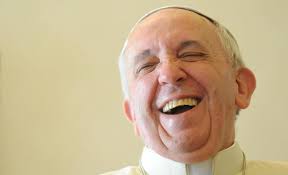
At Easter Mass yesterday, I sang Psalm 118: This is the day the Lord has made; let us rejoice and be glad! And this morning, like the rest of you, I woke up to the heartbreaking news that Pope Francis has gone home to God.

Not feeling very Eastery anymore, I must confess.

And yet. And yet and yet and yet.

The paschal mystery is no respecter of human or even liturgical calendars. Some people’s hearts are awash in gladness, even on Good Friday—as the vibrant music in our parish during the ecumenical Seven Last Words service demonstrated. For others, the “descent into hell” lasts much longer than three days. As Caedemon’s Call sings in their beautiful Valleys Fill First, “It’s like that long Saturday between Your death and the rising day, when no one wrote a word, wondering is this the end.”

In what now appears prescient, my friend Ann Garrido posted a reflection on Good Friday, recognizing in the crucifixion the aching sorrow of our whole world at this political moment. She suggests that, at least for a time, our best response may be silence, “acknowledging that the Word has been taken from us.” I encourage you to read her whole reflection:

THIS GOOD FRIDAY | Ann Garrido

As I try to get my mind and soul around the reality of a world without Pope Francis, I’m praying with his Easter message from yesterday—literally, Francis’ final word on many subjects.

More importantly, I’m holding onto this seven-word prayer taught to him by his grandmother: “Jesus, make my heart more like yours.”

This is the day the Lord has made. Whatever day it feels like in your soul, may the blessings of Francis’ witness of life and love carry you along.

Spirituality, Travel, Writing

Katie (Haseltine) Mullin

Part of the Thankful Thursday Series

During my pilgrimage, one of the practices that sustained me was the Ignatian daily Examen. Even though Ignatius said the prayer should take no longer than fifteen minutes, on the Camino I sometimes devoted up to an hour, wringing every drop of grace from the previous day. Walking through the steps of gratitude, light, rumination, contrition, and hope each morning helped me view my experience through a spiritual lens instead of getting stuck on the physical level. Therefore, when it came time to seek endorsements, Katie (Haseltine) Mullin was at the top of my list of “ambitious asks.” I didn’t know her personally, but had loved her book, All The Things: A 30-Day Guide to Experiencing God’s Presence in the Prayer of Examen. 

Katie came to the Examen as an outsider—an evangelical Christian who found “breathing room” in a Protestant liturgical church where she began receiving spiritual direction, eventually becoming a spiritual director herself. This renders her writing direct and accessible. She’s not parroting insider terminology as someone who grew up in the Jesuit soup might do. Instead, she serves as a translator—a teacher of “Ignatian for Speakers of Other Spiritualities.” As she approaches the Examen from thirty different starting points, she is beautifully clear: this prayer is not a hurdle to be cleared or a set of boxes to be checked, but a golden opportunity to draw close to the God who loves us by rummaging backwards through our days together. Each chapter includes a personal, practical example of how using a particular angle of approach led her to notice something she might otherwise have missed, and thus to grow in friendship with God.

This prayer is not a hurdle to be cleared or a set of boxes to be checked, but a golden opportunity to draw close to the God who loves us by rummaging backwards through our days together.”

In addition to being a writer and spiritual director, Katie offers a variety of coaching services around both the Enneagram and self-care, all in the service of helping people live the lives they’ve been given with hope and purpose. She also works with the Center for the Formation of Justice and Peace. You can learn more about her many hats here on her website.

Katie had such lovely things to say about my book: “Christine Marie Eberle’s Finding God Along the Way felt like an unexpected, long catch up with your best friend on a Sunday afternoon. I found myself in tears as I read the beginning question, ‘Do you want to take a walk with me?’ and they came often as I read in the pages so many relatable struggles wrapped in countless encouraging words and prayers. As a lover of all things Ignatius, I imagined enjoying this book. Spiritual exercises? Yes, please. The Examen? Of course. What I didn’t count on was having my soul respond with such “serenity” (something the author herself found on the pilgrimage) to reading the familiar language and understanding of how I see God. I also I found myself challenged to pray for others on my daily walks with a deeper commitment and to notice the vulnerable in and around me. You don’t have to walk the Camino (though it remains my top bucket list item!) to go on a meaningful journey with Christine and her friends. St. Ignatius wrote in the First Principle, ‘All the things in this world are gifts from God,’ and Christine’s recollections and reflections on her pilgrimage were an incredible gift to me–one I will look back on and savor for its graces.”

As an unexpected grace, Katie and I decided that two women with a shared enthusiasm for the Examen, Ignatian spirituality, writing, and the Enneagram (we’re both Ones) might also enjoy one another.  At her initiative, we hopped on Zoom and shared a marvelous getting-to-know you hour and have stayed in touch ever since.

For the gifts of serendipitous friendship and mutual delights, I am truly grateful!