Spirituality, Writing

Elizabeth Grace Matthew

Part of the Thankful Thursday Series

“Great stories are all the same beneath the splendid array of differences that makes each one unique. The answers (whom to kill, whom to marry, how to cope) are specific to the place, the time, the characters, and the circumstances. But the questions (Who am I? What is my life about? What is my legacy?) that necessitate those answers are universal to the human condition.”

For years, I’ve been quoting this snippet from Elizabeth Grace Matthew during my retreat / keynote called “The Stories that Form Us”—explaining that I encountered it in an America magazine review of the Sex and the City reboot, of all things.  After encouraging people to brainstorm their favorite childhood books or current television series on streaming loops, I ask, “What questions—universal to the human condition—do they address?”

Elizabeth Grace Matthew

A few years ago, at a grade-school faculty retreat not far from my home, a teacher rushed up to me after the session. “Liz Matthew is a friend of mine! Do you want to meet her? I think you’d really like each other!”

It had never occurred to me that a writer I’d read in the Jesuit Review (note reverent tone) would be a mom who lived one town over from me—friendly and funny and fond of our local coffee shop. We met there and hit it off at once, chatting about writing and editing and creative-life balance, right to the outer limit of her childcare.

Several times since then, I’ve found myself sufficiently struck by the quality of writing in an America article to flip back to the beginning and see who wrote it, only to discover Liz’s name again.  (You can check out her articles here.) In addition to writing for many other publications, this mother of four boys is busy working on a book about Little Women and feminism. Sign me up!

It had never occurred to me that a writer I’d read in the Jesuit Review would be a mom who lived one town over from me—friendly and funny and fond of our local coffee shop.

While juggling all that, she made time to read my manuscript and had this to say:  “With humor and insight, Christine Eberle invites us to tag along from afar on her Ignatian Camino. At first glance, this is a book about how extraordinary circumstances super-charged one woman’s spiritual growth. Dig deeper, and it’s really about how ordinary life can also reveal our own opportunities to grow with God. Eberle gives us the context and the questions to better understand our own journeys, and where to look for those opportunities, through the evocative lens of Ignatian spirituality.”

For the serendipity that precedes the exclamation “How have we never met?” and the delight of discussing shared passions, I am truly thankful!

Spirituality, Travel, Writing

Katie (Haseltine) Mullin

Part of the Thankful Thursday Series

During my pilgrimage, one of the practices that sustained me was the Ignatian daily Examen. Even though Ignatius said the prayer should take no longer than fifteen minutes, on the Camino I sometimes devoted up to an hour, wringing every drop of grace from the previous day. Walking through the steps of gratitude, light, rumination, contrition, and hope each morning helped me view my experience through a spiritual lens instead of getting stuck on the physical level. Therefore, when it came time to seek endorsements, Katie (Haseltine) Mullin was at the top of my list of “ambitious asks.” I didn’t know her personally, but had loved her book, All The Things: A 30-Day Guide to Experiencing God’s Presence in the Prayer of Examen. 

Katie came to the Examen as an outsider—an evangelical Christian who found “breathing room” in a Protestant liturgical church where she began receiving spiritual direction, eventually becoming a spiritual director herself. This renders her writing direct and accessible. She’s not parroting insider terminology as someone who grew up in the Jesuit soup might do. Instead, she serves as a translator—a teacher of “Ignatian for Speakers of Other Spiritualities.” As she approaches the Examen from thirty different starting points, she is beautifully clear: this prayer is not a hurdle to be cleared or a set of boxes to be checked, but a golden opportunity to draw close to the God who loves us by rummaging backwards through our days together. Each chapter includes a personal, practical example of how using a particular angle of approach led her to notice something she might otherwise have missed, and thus to grow in friendship with God.

This prayer is not a hurdle to be cleared or a set of boxes to be checked, but a golden opportunity to draw close to the God who loves us by rummaging backwards through our days together.”

In addition to being a writer and spiritual director, Katie offers a variety of coaching services around both the Enneagram and self-care, all in the service of helping people live the lives they’ve been given with hope and purpose. She also works with the Center for the Formation of Justice and Peace. You can learn more about her many hats here on her website.

Katie had such lovely things to say about my book: “Christine Marie Eberle’s Finding God Along the Way felt like an unexpected, long catch up with your best friend on a Sunday afternoon. I found myself in tears as I read the beginning question, ‘Do you want to take a walk with me?’ and they came often as I read in the pages so many relatable struggles wrapped in countless encouraging words and prayers. As a lover of all things Ignatius, I imagined enjoying this book. Spiritual exercises? Yes, please. The Examen? Of course. What I didn’t count on was having my soul respond with such “serenity” (something the author herself found on the pilgrimage) to reading the familiar language and understanding of how I see God. I also I found myself challenged to pray for others on my daily walks with a deeper commitment and to notice the vulnerable in and around me. You don’t have to walk the Camino (though it remains my top bucket list item!) to go on a meaningful journey with Christine and her friends. St. Ignatius wrote in the First Principle, ‘All the things in this world are gifts from God,’ and Christine’s recollections and reflections on her pilgrimage were an incredible gift to me–one I will look back on and savor for its graces.”

As an unexpected grace, Katie and I decided that two women with a shared enthusiasm for the Examen, Ignatian spirituality, writing, and the Enneagram (we’re both Ones) might also enjoy one another.  At her initiative, we hopped on Zoom and shared a marvelous getting-to-know you hour and have stayed in touch ever since.

For the gifts of serendipitous friendship and mutual delights, I am truly grateful!

Blue Ridge Mountains
Book Tour, Service, Spirituality, Travel, Writing

Senator Tim Kaine

Part of the Thankful Thursday Series

Fresh out of college in the summer of ’87, I lived in community in Richmond, Virginia and served as a full-time volunteer at a house of hospitality for homeless people.  Our board chair was a sharp young civil rights attorney who was also a cantor in our parish.  I trusted Tim’s wisdom at board meetings and loved his voice singing “Taste and See” at Mass.  A few years later, he ran for Richmond City Council. I was glad to be home in Philadelphia by then, but sorry not to be able to vote for him.

Picture of a young Tim Kaine
Young civil rights lawyer Tim Kaine chaired the board of Freedom House in the late 80’s.

Tim continued to run for things and win elections: Mayor; Lieutenant Governor; Governor; Senator. After following his career from another commonwealth for almost thirty years, I finally got to pull a lever with his name on it in 2016:  Senator Tim Kaine for Vice President of the United States. Of course, we all know how that went. But for a few shining months, I got to dream of a world in which this Jesuit-educated champion of racial justice and housing equality could be a heartbeat away from the presidency.

After the election, Tim went right back to work. But he also decided to do something to re-ground himself (no pun intended). Over three summers, just after his 60th birthday, he hiked the Virginia portion of the Appalachian Trail, cycled through the Blue Ridge Mountains, and canoed the length of the James River: a quest totaling 1,228 miles. You can read his account of those journeys and the reflections they inspired in his new book, Walk, Ride, Paddle: A Life Outside. (Or better yet, get the audiobook and hear it in his own voice.)

An insight from early in the book has stayed with me.  After losing the election for national office, Tim realized that his political aspirations “didn’t need to go higher; they needed to go deeper.” Following his call, he realized, is not about climbing the next rung of an already tall ladder; it’s about making the most meaningful impact he can in however many years of public service he has left.  In a culture that always encourages us to pursue the next big thing, “higher vs. deeper” is a choice worth pondering.  What will be—in the words of St. Ignatius— “conducive to the greater service of God and the universal good”?  Hint: It might not come with a shiny new title.

In a culture that always encourages us to pursue the next big thing, “higher vs. deeper” is a choice worth pondering.

Still wondering if you want to read Tim’s book? Check out his interview with the National Catholic Reporter’s EARTHBEAT blog: “Sen. Tim Kaine on the Spirituality of Walking, Cycling, Paddling.”

On a series of plane trips this spring, Tim read the manuscript of Finding God Along the Way and shared these kind words: “As one so influenced throughout my life by Jesuit teachers and missionaries, I relished Christine’s account of her walk in the footsteps of Ignatius. A long hike provides space for meditation and epiphanies, and this book provides them on every page, together with the everyday challenges of blisters, variable weather and quirky but delightful international companions. Christine’s observations will illuminate your own walk—whether halfway around the world or in your own backyard.”

For Tim Kaine’s generosity in word and deed, I am truly thankful!

a pile of open books
Liturgy, Scripture, Spirituality, Writing

Lost in Translation

I really ought to get over it. The “new” translation of the New American Bible hasn’t been new since I was in college (1986), and it’s been in liturgical use for more than two decades now. But, every once in a while, something about the revised edition hits my ear badly and sets my head shaking again. This was one of those days.

In today’s Gospel, Jesus is on his way to heal the dying daughter of synagogue leader Jairus when they are halted by an afflicted woman who (literally) reaches out for a cure by touching the tassel of Jesus’ cloak. The ensuing conversation delays the trip to Jairus’ house long enough for people to arrive with news that the child has died. Turning to the stricken father, Jesus says . . .

“Do not be afraid; just have faith.”

Seriously?

I suspect it’s the word “just” that bugs me. Such a dismissive little word. Like the “Just Say No” anti-drug campaign of the 80’s, or Nike’s “Just Do It” commercials, the reality is so much harder than the word “just” implies. In the old (1970) New American Bible—the version engraved on my heart—Jesus says: “Fear is useless; what is needed is trust.” That has always moved me. “Fear is useless” sounds so much stronger than “Do not be afraid.”

I remember, in grad school, learning about the continuum of approaches to biblical translation. On one end is literal translation–as close as possible to word-for-word. On the other is paraphrase–rendering the ancient languages in chatty, accessible prose. In the middle is something called dynamic equivalence, which aims to convey the meaning of the original as fluently as possible in the new language. As I understand it, this was the intent of the 1970 NAB, but it was perceived as having gone too far. The 1986 version is more literal, but to me it feels like they’ve sucked the poetry out of all my favorite texts.

I’m on this today not to lobby for the old translation—clearly, that ship has sailed—but because of a realization that hit me as I was fussing about it.

Last week, I reviewed the suggested copyedits for my new book, including the insertion of translation acronyms after every Scripture citation. In addition to the New American Bible Revised Edition (NABRE), I’ve use the New Revised Standard Version Catholic Edition (NRSVCE), the King James and New King James Versions (KJV & NKJV), and even something called the Complete Jewish Bible (CJB). What is wrong with me? I wondered as I went through the text. Why can’t I just pick a translation and stick with it? (Hah! Once again, “just” is harder than it sounds.) This morning, I realized why: it’s because the translation in my head doesn’t exist anymore, so I’m forever searching for the one that comes closest.

The next time a line of Scripture catches your attention, I highly recommend visiting Bible Gateway, where you can see it in over sixty English translations. (But not the 1970 NAB; for that, you have to haunt used bookshops like I do!) Perhaps you’ll discover a nuance you hadn’t grasped, or a phrasing that speaks to your present circumstances. The most important thing is that you let the Word “dwell in you richly” (to cite many translations of Colossians 3:16), remaining close to your heart where it can make a difference in how you approach the world.

As for me, I’m just going to keep muttering “fear is useless” . . .

Scripture, Spirituality, Writing

What Happened Next?

What treasures from my chest would I not shove
if Jesus looked at
me with that much love?

For months now, I’ve been playing around with the story of the Rich Man in Mark (which you can read here) as an assignment for the Jesuit Media Lab’s Imagining the Gospel series. It’s the Gospel for the 28th Sunday in Ordinary Time (October 13), so I have months left to muse on it. But when I began my morning with Pray As You Go, I discovered that it is also the Gospel for today—Monday of the 8th Week of Ordinary Time. So it felt right to share with you my thoughts in progress.

Although poetry is not my medium, something about this passage kept pulling me in that direction—specifically, the discipline and economy demanded by a sonnet. Perhaps Jesus’ invitation to pare down the rich man’s possessions made me want to do the same with my words?

I’m not saying it’s a good sonnet; mostly, it feels like a high school English assignment—compressing my thoughts into fourteen lines of iambic pentameter. But the ending couplet that began this post has stayed with me:

What treasures from my chest would I not shove
if Jesus looked at
me with that much love?

The story begins with the rich man running up to Jesus, ostensibly seeking guidance but quick to say he’s kept all the Commandments from his youth. (Oy. Brag much?) We know how it ends: after Jesus tells him he’s only lacking one thing (go, sell all you have, give to the poor, and come follow me), the man goes away sad, for his possessions are many. But sometimes we forget the middle, the pivot-point: “Jesus, looking at him, loved him.”

Why did Jesus love him? I don’t think it was his spiritual resume. (Oh, you’ve kept all the Commandments?) Perhaps he was touched by the man’s earnestness or even his anxiety—that someone who’d followed all the rules would still have such deep unease about the path to salvation.

On the other hand, maybe asking “why” Jesus loved him is not the right question. Maybe that spontaneous, compassionate regard is the nature of the beholder, not the merit of the beheld. Maybe to be looked at by Jesus is to be loved by him.

So, what happened next? Was that love transformative? Did the rich man go away sad because he knew he wouldn’t be able to tear himself away from all those possessions—or because he knew how much work lay ahead of him?

I hope it was the latter, but the pressing question today is simply this: Can we allow ourselves to stand in that divine gaze long enough to be transformed by the knowledge of how deeply we are loved?


“What Happened Next?” (with apologies to Shakespeare)

As on a journey they were setting out,
I bet the muttered epithets were rife
When some rich guy delayed them with a shout:
What must I do to gain eternal life?

Our Lord, so patient, listed out the Ten
Commandments. Oh, I’ve kept them from my youth!
“You have but only one thing lacking, then:
Sell all and give, then come and follow Truth.”

Poor foolish burdened ass, you well may say—
Too tied to “stuff” for generous reply.
But I suspect that, as he walked away,
Sheer magnitude of work’s what made him sigh.

What treasures from my chest would I not shove
If Jesus looked at me with that much love?


And here’s the final version, if you’re curious.

Book Tour, Spirituality, Writing

Finding God Along the Way: Coming January 14 from Paraclete Press

You may remember that I made a month-long pilgrimage in the fall of 2022 in the company of twenty-four remarkable souls inspired by the life of St. Ignatius Loyola. Finding God Along the Way: Wisdom from the Ignatian Camino for Life at Home traces our spiritual adventure from its pre-pandemic conception to the lasting transformations we experienced on the far side. Although the book might inspire future pilgrims, I wrote it for those who will make the journey only in their imagination, as the fruit of this experience should not be reserved for those with the freedom to walk away from their life for a month.

I am so grateful to the good people at Paraclete Press for their enthusiastic embrace of my book and their prayerful approach to every aspect of its production and marketing. By mid-May, I’ll have a cover image; stay tuned.

1736812860

  days

  hours  minutes  seconds

until

Pub Date!

Note: We’d originally thought that the book would launch on February 25, and were excited about its being the feast day of Blessed Sebastian de Aparicio, patron saint of travelers and road builders. But we want to have it firmly in people’s hands in time for Lent, so January 14 it is. I can’ wait! (But I shall.)

To ensure that you receive the pre-order announcement for the book, make sure you are signed up for my newsletter (which I send approximately monthly).

Processing…
Success! You're on the list.
mountains with an arrow painted on the rocks

Pictured here: one of the countless orange arrows marking the Ignatian Way!

Writing

Books I Love by People I Love

‘Tis the season . . . to curate gift lists! If you’re seeking inspiration for that hard-to-shop-for someone, consider one of these. I can vouch for the quality of both the writing and the humanity of each author friend.

Links are to Barnes & Noble, with gratitude to Lynn Rosen at the Rittenhouse Square store for inviting me to sell my books in person next Saturday (12/16) from 1-3; stop by if you’re local! If you have an independent bookstore in your neighborhood, however, I encourage you to shop there or support them by ordering through Bookshop.org. (Be sure to check delivery times if it must be there by Christmas.)

If you want to give my books for Christmas and can’t make it on Saturday, just email me and I’ll move heaven and earth to get personalized, signed copies to you or your chosen recipients. (I’ll even gift-wrap!)

With no further ado, here’s my list of Books I Love by People I Love (alpha by author):

The Little Book of Listening: Listening as a Radical act of Love, Justice, Healing, and Transformation by Sharon Browning et al.
Through her “Just Listening” work, Sharon has been a blessing to people in the Philadelphia area and well beyond; her co-authors’ credentials are equally inspiring. GIFT THIS TO anyone who genuinely wants to do the hard work of listening to people who come from varied life experiences.

Heart of Stone by David W. Burns
Dave is a fellow SJU alum who’s been writing all his life. Like me, he entered a Pitch Week competition at When Words Count in Vermont. Unlike me, he swept all five categories, handily winning the gold. Heart of Stone is the first in a series featuring heroine Kyra Anastas, a Gorgon (yes, snakes for hair) working as a hit-woman in present-day Chicago. GIFT THIS TO anyone who likes fast-paced action with a smart, sassy protagonist and a dash of mythological assassins.

The Diary of Jesus Christ by Bill Cain, SJ
I met Fr. Bill at the Ignatian Creators Summit last summer and quickly became enchanted with his work. A playwright and screenwriter, he retells familiar Gospel narratives as they might have been captured by Jesus himself (if the Lord kept a journal). After reading one of the chapters, I texted Bill to say “I’m weeping reading this,” to which he responded “Well, I was weeping when I wrote it, so . . . ” GIFT THIS TO anyone who wants to grow closer to God through imaginative prayer.

The Language of the Soul: Meeting God in the Longings of Our Hearts by Jeff Crosby
Jeff and I became writerly friends after he discovered my first book by spotting it in a catalog. (Who knew that actually happened?) In this cozy book, Jeff explores the concept of saudade—a “vague and constant desire for something that does not and possibly cannot exist.” He muses through ten longings, adding resources for further reading as well as a musical playlist to accompany each one. GIFT THIS TO: any spiritually-minded person who likes to read with pencil in hand.

Renewable: One Woman’s Search for Simplicity, Faithfulness, and Hope by Eileen Flanagan
How did a former Peace Corps Volunteer wind up living in a big house with a basement full of stuff she didn’t need? Reading my friend Eileen’s beautiful account of the “midlife spiritual crisis” she experienced on the brink of 50 when I was that age myself, I found it familiar, moving, and inspirational. (Check out her other books you might enjoy.) GIFT THIS TO anyone who needs to recover their bearings and move with courage into the second half of life.

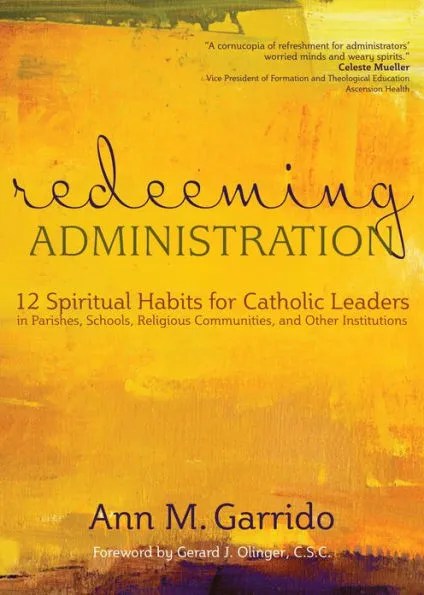
Redeeming Administration: 12 Spiritual Habits for Catholic Leaders in Parishes, Schools, Religious Communities, and Other Institutions by Ann Garrido
You may know Ann from Catholic Women Preach; I fell in love with her voice when we were presenting at the same conference. I own many of her books, but this one really spoke to me when I was trying to find meaning in a ministry marked by too many tedious administrative tasks. GIFT THIS TO anyone who is trying to bring grace and goodness to the art of being “the boss.”

Madonnas of Color by Bro. Mickey McGrath
Confession: I love pretty much everything Brother Mickey has ever drawn, written, published, said aloud, or maybe even thought about, but this one is particularly striking. Though it can be devoured in a morning (as I confess I did), each tile in this gorgeous mosaic of a book is exquisite, worthy of its own prayerful contemplation. GIFT THIS TO: anyone brave enough to pray with the history of racism and the divisions in our country in the company of the Blessed Mother.

The Coffeehouse Resistance: Brewing Hope in Desperate Times by Sarina Prabasi
I met Sarina at When Words Count when we were each at the beginning of our publication journey, and now I’m delighted to call her a friend. One of my favorite things to do in NYC is visit Buunni Coffee, where Sarina and her husband Elias brew good trouble along with their excellent coffee. From Nepal to Ethiopia to Washington Heights, her memoir is riveting. GIFT THIS TO anyone who loves coffee and democracy. (Or just democracy.)

Darling Girl by Terry H. Watkins
Terry and I competed in Pitch Week together; she edged me out by one point and we’ve been friends ever since! This delightful read is a series of vignettes narrated by “DG,” a precocious child from a troubled and peripatetic southern family. We fall in love with five-year-old DG on the first page and root for her all the way to the brink of college. GIFT THIS TO anyone who enjoys curling up with a good story and rooting for the underdog.

Retreats, Spirituality, Writing

While the Kid’s at Camp

Three weeks ago, I emailed the manuscript of Finding God Along the Way to my editor, and now I don’t know what to do with myself. Is this what it’s like to send a child to sleepaway camp? I’d been paying such steady attention to my little darling, guiding it from scattered notes and random chapters into a bona fide grownup book with a table of contents and everything. Now it’s having an NYC adventure without me, and I miss it.

Of course, it’s coming back. Any day now, I’ll open the door of my inbox and there it will be, three inches taller and badly in need of a haircut, with loads of laundry to be done and lots of opinions it didn’t posses before I let it out of the house.

I can’t wait.

I truly love editing season–because I truly love my editor. Peggy Moran gets me; she laughs at my jokes, understands what I’m trying to accomplish, and always makes my work better. I get such a kick out of our conversations in the comments section, where we hash out adverbs and cadence and what-constitutes-a-commonly-known-word. She never fails to challenge obscure expressions (Brigadoon, anyone?) and will call me out on overused vocabulary (like the phrase “of course,” which apparently I often deploy to sneak the reader around to my side of an argument before making it). My manuscript will return to me changed, but that’s not a bad thing.

Until that ragamuffin shows up on my doorstep, however, I am using the time to focus on other work–the freelance equivalent of organizing closets and canning vegetables. I took an eight-week online class this summer for writers of spiritual nonfiction (fascinating), and leave tomorrow for the Ignatian Creators Summit; both of these cool opportunities have been sponsored by the Jesuit Conference. I’ve also been prepping for fall retreats, which include a day of prayer with the IVC Baltimore community and a women’s weekend for St. Elizabeth of Hungary parish in Wycoff, NJ, as well as several Advent engagements. (Check out my Speaker page for details; there’s room for more!)

Another upside to this hiatus: not constantly reading my own book has created space for others’. I know I’m late to this party, but I just devoured Erik Larson’s Devil in the White City and Tara Westover’s Educated. Both were recommended by my friend/Pilates instructor Elysabeth Gelesky, who left this world abruptly (and way too young) in May. How I miss our weekly conversations about books, movies, recipes, travel, and so many other things! I wish I could recommend to her Otherwise, a lovely book of poems by Jane Kenyon which I received as a birthday gift. The closing line of the title poem reminds me of Elysabeth as it invites me to cherish all my loves and friendships, because “one day, I know, it will be otherwise.”

More inspiration that’s come my way this summer includes two preaching podcasts (one new, one new-to-me). If you’re hungry for really solid homilies, check out “believe. teach. practice” by BJ Brown and Fr. Walter Modrys, SJ (who alternate weeks and introduce each other’s sermons) as well as America Media’s new podcast, “Preach,” which presents a homily then invites the preacher to reflect on the process.

Finally, allow me to rhapsodize about a book coming out on September 5 from Woodhall Press: Heart of Stone by David W. Burns. Dave is a college friend of mine (Go Hawks!) who entered the Pitch Week XXV competition at When Words Count in Vermont last year and swept all the categories. His heroine—a fast-thinking, wise-cracking, self-deprecating Gorgon working as a hit-woman in Chicago—takes readers on a satisfying romp, cheating death (in the form of mythical assassins) at every turn. This is an awesome read with a redemption theme; treat yourself and pre-order a copy! (Or, if you’re local, stop by Dave’s table at the Collingswood Book Festival on October 7.)

However you are spending these waning days of summer, I pray that you are carving out quality time for yourself and those you love. In, through, and above all, may you find God along the way!

Blessings,
Christine

Retreats, Spirituality, Writing

After Hibernation . . .

I just checked the date of my last entry and realized I’ve gone a quarter of a year without blogging, and even longer without posting anything on social media. What’s up with that? Have I been hibernating?

Actually, I’ve been writing, which feels just as delightfully restorative. When I returned from the Ignatian Camino in November, I took some time to ease back into “regular” life. Knowing that my speaking schedule would pick up in February with the beginning of Lent, after the holidays I made a decision: devote January to working on my next book, Finding God Along the Way: Wisdom from the Ignatian Camino for Life at Home.

Hank, the Basset Hound

What a luxury! I spent much of the last month slipping out of bed at 5:30 a.m. to write, giving myself permission to ignore all other tasks until the last of my creative energy was spent. This was particularly satisfying during the five days I dog-sat at my brother’s house; there’s nothing like snuggling up with an eighty-pound basset hound to keep you in one place. (Pictured here: Hank overseeing my progress from the back of the sofa.)

Originally, the subtitle of this new book was going to be “Lessons from the Ignatian Camino for Life at Home.” While I like the pairing of “lessons” and “life” (adoring alliteration as I do), the more I wrote, the less appropriate the subtitle felt. The effects of the Camino are dynamic, continuing to unfold. The word Lessons feels too pat—like I should be tying an instructive bow at the end of every chapter. So I’ve shifted to Wisdom, which feels more open-ended. Here’s how I describe it in the introduction:

The wisdom of the Ignatian Camino is not just for those with the resources to fly to Spain, lace up their boots, and hit the road.  It is everyday wisdom, useful whether or not your life is marked by good health, financial freedom, or job flexibility.  Like all wisdom, it needs to be savored, so I would encourage you not to race through this book to find out “what happened.” 

I’m trying not to race through the book, either. After drafting a few chapters that belong somewhere in the middle (starting there because they were fun to write), I’ve gone back to the beginning, paging through my notes, photos, and reflections to stir my memories. Sometimes I get lost down an internet rabbit hole, looking at maps of the terrain we crossed, or trying to figure out the name of that church / park / village we visited. And yet, this is not a travelogue; despite veering away from the word “lessons,” with every chapter I ask myself what I learned, and how that wisdom is bearing fruit back at home. If it’s not, it’s not worth sharing.

My January hibernation got me almost to the midpoint of Finding God Along the Way, making me optimistic about my (self-imposed) June deadline for a finished first draft. Now that February is here, I still take most mornings to write, but after that I turn my attention to the Lenten programs on my horizon. Allow me to highlight the newest here:

On the weekend of March 10-12, at the Loyola House of Retreats in Morristown NJ, I’ll be co-leading a retreat called “Brother and Sister and Mother to Me: God’s Holy Family is Wider Than We Know.” The idea for this retreat came when Loyola invited presenters to design retreats for the 2023 season around the theme of “family.” My mind immediately went to how many people feel omitted or excluded—for a variety of reasons—when the Church starts using that word, and I knew I wanted to do something for them. For us.

Here’s how my friend and co-presenter Linda Baratte and I are describing the retreat:

A treasured insight in our Catholic tradition is the idea of family as the domestic Church—an honored place where, like the Holy Family, we first learn to love.  But what if our family bears little resemblance to that sacred threesome? We can often feel on the fringe of Church and parish life.  Whatever our family configuration, what would it mean to embrace the radical, wider vision of family that Jesus is inviting us to—with faith, not blood nor history, as our DNA?  In our retreat weekend together, we will explore and celebrate the richness of all the ways God has called us to be family to one another.

Now, that feels worth coming out of hibernation for! If it piques your interest–for yourself or someone you love–check out Loyola’s website for details. And be sure to visit my Speaker page for other Lenten offerings; Ash Wednesday is two weeks from today!

Now, back to Spain (if only in my brain) I go . . .

Spirituality, Writing

The Hardest Question

How was the Camino?

This question is both utterly welcome and so hard to answer. Where do I begin? It’s easy to talk about miles and blisters; it’s delightful to describe gorgeous vistas and wonderful companions. However, as I predicted, the essential things all happened on the inside, in the space created by my walking, prayer, and ultimately surrender to the experience.

I was determined to keep track of the outer and inner journey, so after waking up early every morning to get hydrated and caffeinated for the walk ahead, I pulled out my bluetooth keyboard and captured everything I could recall from the previous day. This left me with lots of raw material for my next book (tentatively titled Finding God Along the Way: Lessons from the Ignatian Camino for Life at Home), but it doesn’t help me answer the “how was it” question. It’s too much, just as my photos are too much; I need to cull the impressions down to a shareable size.

I did manage to write five short essays for the Ignatian Volunteer Corps to email to those following our journey. Here are my Reflections from the Road, which capture some of the experience as it was unfolding.

The point of pilgrimage, however, is transformation, and transformation takes time. The true measure of the Camino will be taken after my feet have healed and I am fully integrated back into my “normal” life, not thinking of Spain almost every waking minute. What changes will persist after the drama of the physical journey has subsided? That’s what I’m eager to know, yet only time will tell. For the moment, let me share just two words that I hope will continue to mark this experience: solidarity and indifference.

Solidarity

During one of our group reflections, I shared that I was trying to let the challenges of the Camino connect my heart to people who do hard things every day. Walking across a desert on blistered feet, for example, I tried to hold in prayer all those refugees who make arduous desert crossings without LL Bean hiking poles in hand or a pilgrims’ shelter on the horizon. “So many people’s lives are impossibly hard every day,” I said. “This is just a month, and we volunteered for it.” At that, Fr. Jose cracked up. “Volunteered?” he laughed. “You PAID for this!”

Indeed we did. This exercise in solidarity was imaginative at best, and is valuable only if it is also transformative, keeping me mindful of and compassionate towards those who suffer hardships that my month-long sojourn only hinted at.

Indifference

How much longer will we be walking uphill? Is it going to rain today? When do we stop for lunch? Will we sleep in private rooms or a bunk room tonight? Is there a washing machine at the next hostel? These and countless other questions popped into our heads and flew out of our mouths all day long, but Fr. Jose kept encouraging us to stay focused on the now. This path. These companions. This moment. This prayer. These smells and sounds and sights and feelings. He was teaching us to unhook our minds from a preoccupation with what might be, so as to be fully present to what was right in front of us, and to welcome with open hearts whatever came our way.

Of course, this was rendered easier by the fact that we had so few choices available to us (other than, in the words of Victor Frankl, the freedom to choose our attitude). Now that we are home and get to decide every blessed thing for ourselves again, it is easy for those superficial wants to clamor for attention. My hope is that I can allow my passing preferences to matter less, so as to be more present to what is, and allow that to call forth, as Ignatius would say, a deeper response to my life in God.

How was the Camino? It was the hardest and best thing I’ve ever done. Yet ultimately, we will know this experience by its fruit, and it’s not even close to harvest time.

Stay tuned!

Fresh pilgrims depart from Loyola.

Journey’s End: Manresa!