As I’ve been playing “what-were-we-doing-two-years-ago” all month, so many profound and silly memories have surfaced. Here’s one of the latter, told as part of Chapter Forty, “La Cova.” It takes place on the evening of October 30—the day after what we thought had been our final hike, from Montserrat to Manresa. Enjoy!
At three-thirty that afternoon, Fr. José told us, we were to meet in the garden to walk to Mass at Our Lady of Good Health. We should be sure to wear our boots, he added, and bring our hiking poles. Oh, good grief, I thought. How are we not done with those? And why are we hiking to Mass when there are more chapels than I can count right here in our residence?
The hour’s walk took us through the old town and surrounding commercial district, then onto a rocky path through the fields beyond. I will confess, I was grumpy.
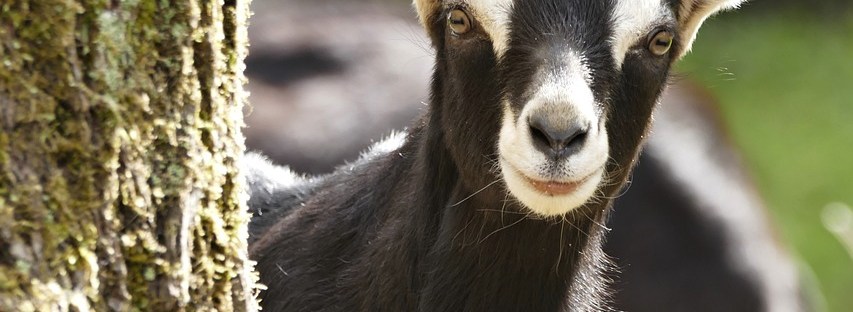
My mood lightened when I discovered that we’d be sharing the road with goats. In the field beside us strode an actual goatherd—wearing sandals, carrying a crook, and accompanied by a frisky dog. (A twenty-first-century goatherd, he was also wearing jeans and a camo baseball cap, but still, it was pretty cool.) Close on his heels were at least fifty goats of varying colors and sizes, each sporting a noisy bell. As we hustled forward, the goats followed, kicking up a cloud of dust behind us until our ways diverged.
The surreal goat encounter banished what was left of my petulance. And, of course, the walk was worth it. Santa Maria de la Salut is a tenth-century hermitage. Preserved in the entryway is a rectangular slab identified (in Catalan, English, and French) as “the stone where Saint Ignatius knelt down on his visits to this sanctuary.”
How is it that a hunk of rock touched by Ignatius’ knees has been preserved for five hundred years? Fr. José explained that the ordinary people of Manresa kept Ignatius’s memory alive, realizing that they had been in the presence of a holy man. According to Tellechea Idígoras’s biography, when the saint’s canonization process was opened in 1594—seventy-two years after his sojourn in Manresa—many testified to the lasting impression Ignatius had made on them or on their parents and grandparents. Perhaps that’s why he continues to feel so present in this place.
As daylight was no longer being saved, the sun had dipped below the horizon already by the time we finished Mass. We started back at a good pace, hoping to reach the paved roads before dark; nevertheless, we had to navigate the treacherous end of the rocky path by flashlight. At last, we reached the bright Burger King and KFC signs on the outskirts of the city—a sharp contrast to the millennium-old hermitage and timeless goatherd. Like many of the towns we visited, Manresa is a place where the past and present coexist.
After dinner, we gathered for our final reflection . . .
This morning, I received a WhatsApp message from one of my pilgrim friends, who has returned to Spain with her husband and is spending a few days in Zaragoza. On Bette’s vacation, the city is a beautiful place to explore for a few days between San Sebastian and Barcelona. On my pilgrimage, it was the blessed oasis where Porter and I ground to a halt, nursing our blistered feet and his sudden fever.
A peek at the calendar revealed that I was in Zaragoza exactly two years ago this weekend. What more excuse do I need to share an excerpt of Finding God Along the Way with you? This is from Chapter 25, “Pausing.” It picks up in Tudela, after Fr. José doctored Porter’s and my disastrous feet, shook his head, and gave us directions to the train station.
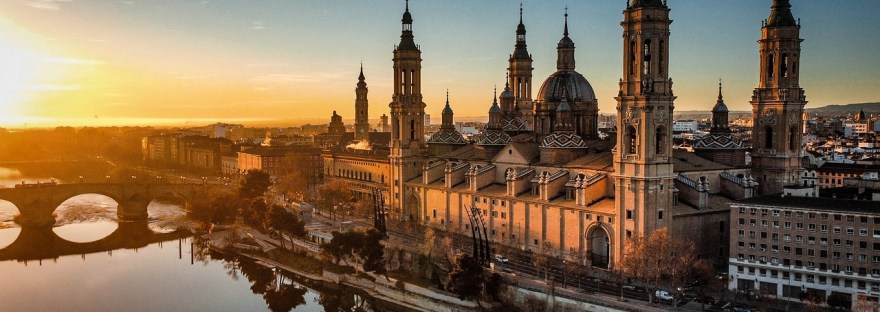
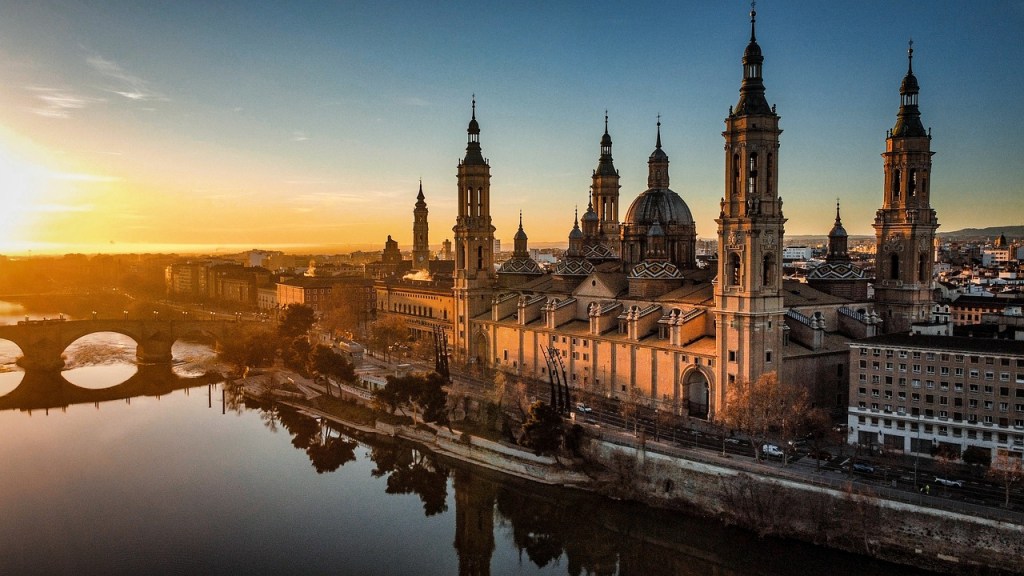
Sunrise over the Basilica of Nuestra Señora del Pilar in Zaragoza
There’s an old tale in which Himalayan sherpas (or, in another version, African tribesmen) are hired by a group of American trekkers to transport their supplies. After a few days of walking fast and far, the locals sit down and refuse to move for several hours—waiting, it’s explained, for their souls to catch up with their bodies. Although I didn’t have the liberty of such on-the-spot refusal along the Camino, I did come to appreciate the power of the pause.
My longest was the three days I spent in the city of Zaragoza. On a Monday morning, Porter and I caught the train from Tudela, ensconced ourselves in a café so I could write for a while, then walked slowly to the Hotel Sauce. Doing our best to approach this wide-open day with wide-open spirits, we lingered wherever we saw something interesting. We stopped in a hardware store for a carabiner to secure the straps of Porter’s old suitcase and visited a department store—El Corte Inglés—to invest in new hiking socks. That brief stroll recalled us to ourselves, reminding us how much we enjoy exploring a new city. It also helped us see beyond our transitory struggles, anchoring us in the surpassing goodness of our life together.
Despite our having a free day on Tuesday, by Wednesday morning my feet were still awful, and Porter was feverish—felled by the slow-moving stomach virus that had been making its way through the group. We would have to linger in Zaragoza for one more day. Our hotel room had a bathtub with a broad ledge at one end, allowing me to indulge in two refreshing pastimes while Porter slept: soaking my feet and perusing the New Yorker magazine I’d optimistically chucked in my suitcase.
Late [the next] afternoon, I made a long, solo visit to the Basilica of Nuestra Señora del Pilar—Our Lady of the Pillar—whose origins were the stuff of legend. When St. James began evangelizing the Iberian peninsula in the first century, the story goes (preaching the Gospel “to the ends of the earth”), he almost despaired of bringing the Christian faith to that pagan land. One day, while he was deep in prayer along the banks of the Ebro River, the Blessed Mother appeared to him atop a rosy pillar, encouraging him not to forsake his mission.
Despite COVID restrictions, visitors still can touch a bit of the titular pillar.
Today, the cavernous interior of the Basilica houses an intimate chapel where a tiny Mary statue sits atop a pillar of pink jasper. Even though the Basilica felt cold and empty, the chapel was warm with the devotion of many visitors; I was lucky to witness a weekly ceremony where children receive a special blessing and get their picture taken with the statue. Pausing in prayer, I felt something shift in me; heading back to the hotel, I realized that I was walking much more easily. Like the apostle James in that same place almost two millennia ago, I felt a renewed hopefulness and a readiness to rejoin my friends on the road the next morning.
Though the three-day break in Zaragoza was a great blessing, pauses did not need to be long to be restorative. On our steepest climbs, when the grade was fierce, I allowed myself to stop for a few deep breaths every ten steps. Count to ten; stop and breathe. Count to ten; stop and breathe. In addition to getting much-needed oxygen to my lungs and leg muscles, this strategy kept hope in view. I knew that in seven . . . five . . . three more steps, I could take a brief, blissful pause, until the terrain grew merciful, and I could press on without stopping.
The most delightful pauses arrived unexpectedly. Occasionally, as we walked through the woods, a clearing would open and—voilà—a café where we could grab a quick cortado and use real restrooms. Fr. José never told us they were coming. This was consistent with his desire to keep us in the present moment, though I suspect he also relished being able offer us a pleasant surprise. Those periodic oases of rest lasted just long enough to refill my well of gratitude before starting out again.
Perhaps my insight here seems obvious. Take a break; do you really need me to tell you this? But maybe you do; maybe, like me, you tend to soldier on. Maybe you never take a sick day (or didn’t, until COVID made bringing your germs to work seem less heroic). Maybe you wouldn’t dream of closing your eyes for five minutes after lunch. Maybe you stare at the Sunday crossword puzzle long after your brain has stopped generating solutions, or routinely accept diminishing returns for your labor in exchange for the ego boost you get from thinking of yourself as a person who “never quits.”
So, in case you do need to hear it, I’ll say it again: There is power in the pause. Whether for a moment or an hour, a day or a week, a well-timed pause can reconnect us to ourselves, giving us fresh energy and perspective. More importantly, the pause can reconnect us to God—inventor of the Sabbath, after all—for whom accomplishment is never everything.
You know who knew this? Jesus. He routinely slipped away from a life of preaching and miracle-working to pause, pray, and recharge. “Come to me, all who labor and find life burdensome, and I will give you rest,” he said—not “and I’ll give you more to do!” Holy pausing is not about taking the easy way out or shirking our share of life’s burdens. It’s about acknowledging our utter dependence on God, who alone provides strength for the journey.
Today marks a big anniversary: On October 5, 2022, at a retreat house in Azpeitia, Spain, my band of pilgrims gathered for our first group meeting with Fr. José Iriberri, the Director of the Ignatian Camino. We had no idea what the next twenty-seven days (or three hundred miles) would hold. In honor of that anniversary, here’s a little excerpt from the beginning of Finding God Along the Way, coming in January from Paraclete Press. Enjoy!
On an October evening in 2022, fifteen pilgrims still trying to remember each other’s names shifted anxiously in a circle of hard plastic chairs, eyes trained on our fearless Jesuit guide. The fluorescent-lit conference room’s unadorned walls gave no hint that we were in the shadow of the tower house of Loyola—the long-envisioned starting point of our grand adventure.
The youngest of us was fifty-five, the oldest seventy-nine. We were ten women and five men, hailing from across the United States as well as Canada, Australia, and Malaysia. The group included couples, widows, singles, and married folks traveling solo. Some were old friends; others knew no one. Although many were part of the Ignatian Volunteer Corps, the rest were drawn simply by their love of Ignatian spirituality. Seventeen days and some two hundred miles later, ten more people would be joining us for the final hundred miles of our journey.
“Introduce yourself briefly and tell us why you’re here,” Fr. José began, “then name your biggest fear about the Camino.” The man knew how to get to a point. A less skilled facilitator might have started with an easier icebreaker, but Fr. José didn’t want us to skim the surface. He wanted us to practice going deep.
Our fears were surprisingly similar. Most of us were worried that we’d packed the wrong things, that our bodies were going to fail us, or that somehow we would fail ourselves by not engaging the experience properly. Betsy—a petite woman with an endearing Southern accent and perfect comic timing—put it best when she confessed to fearing “pilgrim envy.” Her husband, Charlie, was the Ignatian volunteer; what if she turned out to be a remedial pilgrim, not “holy” enough for the Camino to be effective? When more than one head nodded in recognition, Fr. José encouraged us to resist the temptation to compare ourselves to one another, assuring us that, while each person’s experience would be different, God would not be stingy with the divine gifts.
While each person’s experience would be different, God would not be stingy with the divine gifts.
As the meeting drew to a close, Fr. José paused and looked around the circle slowly, letting the anticipation grow, then leaned in and offered one more bit of inspiration. “Pilgrimage can change the world,” he said. “I really believe this. Now, let’s get ready for tomorrow.”
During my pilgrimage, one of the practices that sustained me was the Ignatian daily Examen. Even though Ignatius said the prayer should take no longer than fifteen minutes, on the Camino I sometimes devoted up to an hour, wringing every drop of grace from the previous day. Walking through the steps of gratitude, light, rumination, contrition, and hope each morning helped me view my experience through a spiritual lens instead of getting stuck on the physical level. Therefore, when it came time to seek endorsements, Katie (Haseltine) Mullin was at the top of my list of “ambitious asks.” I didn’t know her personally, but had loved her book, All The Things: A 30-Day Guide to Experiencing God’s Presence in the Prayer of Examen.
Katie came to the Examen as an outsider—an evangelical Christian who found “breathing room” in a Protestant liturgical church where she began receiving spiritual direction, eventually becoming a spiritual director herself. This renders her writing direct and accessible. She’s not parroting insider terminology as someone who grew up in the Jesuit soup might do. Instead, she serves as a translator—a teacher of “Ignatian for Speakers of Other Spiritualities.” As she approaches the Examen from thirty different starting points, she is beautifully clear: this prayer is not a hurdle to be cleared or a set of boxes to be checked, but a golden opportunity to draw close to the God who loves us by rummaging backwards through our days together. Each chapter includes a personal, practical example of how using a particular angle of approach led her to notice something she might otherwise have missed, and thus to grow in friendship with God.
This prayer is not a hurdle to be cleared or a set of boxes to be checked, but a golden opportunity to draw close to the God who loves us by rummaging backwards through our days together.”
In addition to being a writer and spiritual director, Katie offers a variety of coaching services around both the Enneagram and self-care, all in the service of helping people live the lives they’ve been given with hope and purpose. She also works with the Center for the Formation of Justice and Peace. You can learn more about her many hats here on her website.
Katie had such lovely things to say about my book: “Christine Marie Eberle’s Finding God Along the Way felt like an unexpected, long catch up with your best friend on a Sunday afternoon. I found myself in tears as I read the beginning question, ‘Do you want to take a walk with me?’ and they came often as I read in the pages so many relatable struggles wrapped in countless encouraging words and prayers. As a lover of all things Ignatius, I imagined enjoying this book. Spiritual exercises? Yes, please. The Examen? Of course. What I didn’t count on was having my soul respond with such “serenity” (something the author herself found on the pilgrimage) to reading the familiar language and understanding of how I see God. I also I found myself challenged to pray for others on my daily walks with a deeper commitment and to notice the vulnerable in and around me. You don’t have to walk the Camino (though it remains my top bucket list item!) to go on a meaningful journey with Christine and her friends. St. Ignatius wrote in the First Principle, ‘All the things in this world are gifts from God,’ and Christine’s recollections and reflections on her pilgrimage were an incredible gift to me–one I will look back on and savor for its graces.”
As an unexpected grace, Katie and I decided that two women with a shared enthusiasm for the Examen, Ignatian spirituality, writing, and the Enneagram (we’re both Ones) might also enjoy one another. At her initiative, we hopped on Zoom and shared a marvelous getting-to-know you hour and have stayed in touch ever since.
For the gifts of serendipitous friendship and mutual delights, I am truly grateful!
Fresh out of college in the summer of ’87, I lived in community in Richmond, Virginia and served as a full-time volunteer at a house of hospitality for homeless people. Our board chair was a sharp young civil rights attorney who was also a cantor in our parish. I trusted Tim’s wisdom at board meetings and loved his voice singing “Taste and See” at Mass. A few years later, he ran for Richmond City Council. I was glad to be home in Philadelphia by then, but sorry not to be able to vote for him.
Young civil rights lawyer Tim Kaine chaired the board of Freedom House in the late 80’s.
Tim continued to run for things and win elections: Mayor; Lieutenant Governor; Governor; Senator. After following his career from another commonwealth for almost thirty years, I finally got to pull a lever with his name on it in 2016: Senator Tim Kaine for Vice President of the United States. Of course, we all know how that went. But for a few shining months, I got to dream of a world in which this Jesuit-educated champion of racial justice and housing equality could be a heartbeat away from the presidency.
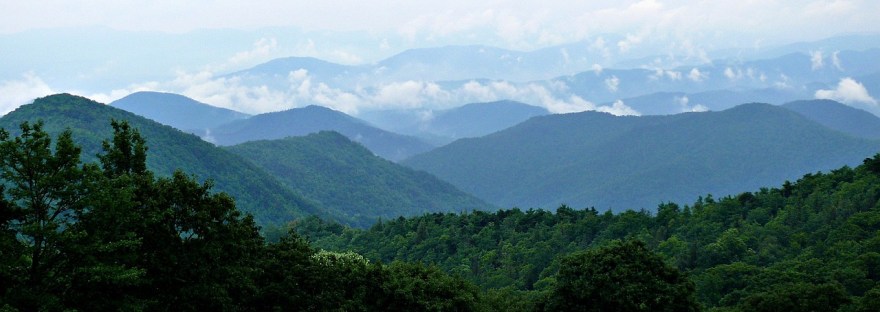
After the election, Tim went right back to work. But he also decided to do something to re-ground himself (no pun intended). Over three summers, just after his 60th birthday, he hiked the Virginia portion of the Appalachian Trail, cycled through the Blue Ridge Mountains, and canoed the length of the James River: a quest totaling 1,228 miles. You can read his account of those journeys and the reflections they inspired in his new book, Walk, Ride, Paddle: A Life Outside. (Or better yet, get the audiobook and hear it in his own voice.)
An insight from early in the book has stayed with me. After losing the election for national office, Tim realized that his political aspirations “didn’t need to go higher; they needed to go deeper.” Following his call, he realized, is not about climbing the next rung of an already tall ladder; it’s about making the most meaningful impact he can in however many years of public service he has left. In a culture that always encourages us to pursue the next big thing, “higher vs. deeper” is a choice worth pondering. What will be—in the words of St. Ignatius— “conducive to the greater service of God and the universal good”? Hint: It might not come with a shiny new title.
In a culture that always encourages us to pursue the next big thing, “higher vs. deeper” is a choice worth pondering.
Still wondering if you want to read Tim’s book? Check out his interview with the National Catholic Reporter’s EARTHBEAT blog: “Sen. Tim Kaine on the Spirituality of Walking, Cycling, Paddling.”
On a series of plane trips this spring, Tim read the manuscript of Finding God Along the Way and shared these kind words: “As one so influenced throughout my life by Jesuit teachers and missionaries, I relished Christine’s account of her walk in the footsteps of Ignatius. A long hike provides space for meditation and epiphanies, and this book provides them on every page, together with the everyday challenges of blisters, variable weather and quirky but delightful international companions. Christine’s observations will illuminate your own walk—whether halfway around the world or in your own backyard.”
For Tim Kaine’s generosity in word and deed, I am truly thankful!
Seventy-seven miles walked. Nine buses, six ferries, five trains, three flights, two subways, and one tram. What do I remember most from two weeks in Scotland and Ireland? The people. (And their dogs.)
Maybe my introverted self is just more inclined to talk with strangers abroad, or maybe the Scots/Irish are more naturally garrulous and convivial. Either way, on a trip in which gorgeous scenery was a given and meaningful time with pilgrim friends (Iona) and dear family (Omagh) an expected high point, many surprising human and canine encounters linger in my imagination.
Having arrived in Edinburgh at the time of the King’s Garden Party, Porter and I were treated to the sight of many ladies in fancy hats and men in full kilt regalia. At a pub for dinner that night, we struck up a conversation with an older couple at next table. They’d come all the way from the Orkney Islands to have tea at Holyrood Palace with Charles, Camilla, and eight thousand fellow Scots. They were absolutely radiant about the experience, but also about their home island—so far north that it was formerly owned by Norway! Despite the challenges of the man’s thick brogue, Porter and the husband quickly launched into a conversation about gardening, while his wife and I discussed the delights and difficulties of life in such a far-flung place. (I had an easier time, as she was striving to “speak more properly” in the capitol!)
In the port town of Oban, we had dinner in a pub with shared tables, where we met a young couple whose English bulldog, Bluebell, was doing a fine job of keeping the floor crumb-free. (Scotland, you had me at dogs-in-pubs!) Later in the meal, we chatted with a man named Ari who was riding his motorcycle to Ireland—from Finland. Crossing countries by bike and channels by ferry, he was following his bliss with precious little baggage. Though I’d been feeling pretty good about my streamlined packing (no giant suitcase for me this time), I felt a flurry of envy for the freedom he described.
Monty
On the isle of Iona, we took a boat to the tiny isle of Staffa to see nesting puffins and their pufflings. Cuter birds may not exist anywhere! But again, the highlight was a conversation I struck up with boat mates Gerry and Lynn, who were staying on the Isle of Mull with Monty, their three-year-old “flat haired double poodle” (the shaggy offspring of a cockapoo and a golden doodle). Though they’d done a lot of international traveling earlier in life, now they only want to go where they can take their dog. Consequently, they are getting to see some beautiful parts of their own country. (Thank goodness Monty likes boats!)
The next day, we bundled up and took a long walk to one of Iona’s beaches, sharing a picnic lunch while sitting on the damp sand with our backs against a warm rock. Walking back, we passed an English bulldog whose people looked familiar. “Bluebell?” Yes indeed–and her companions Andy and Sara, who were on a day trip from Oban. While we were marveling at running into each other again, approaching from the other direction came Monty, Gerry, and Lynn on a day trip from Mull. What were the odds that we’d simultaneously encounter two dogs whose names we knew—who were staying on two other islands? The magic of Iona knows no bounds!
Andrew and his “wee highland coo”
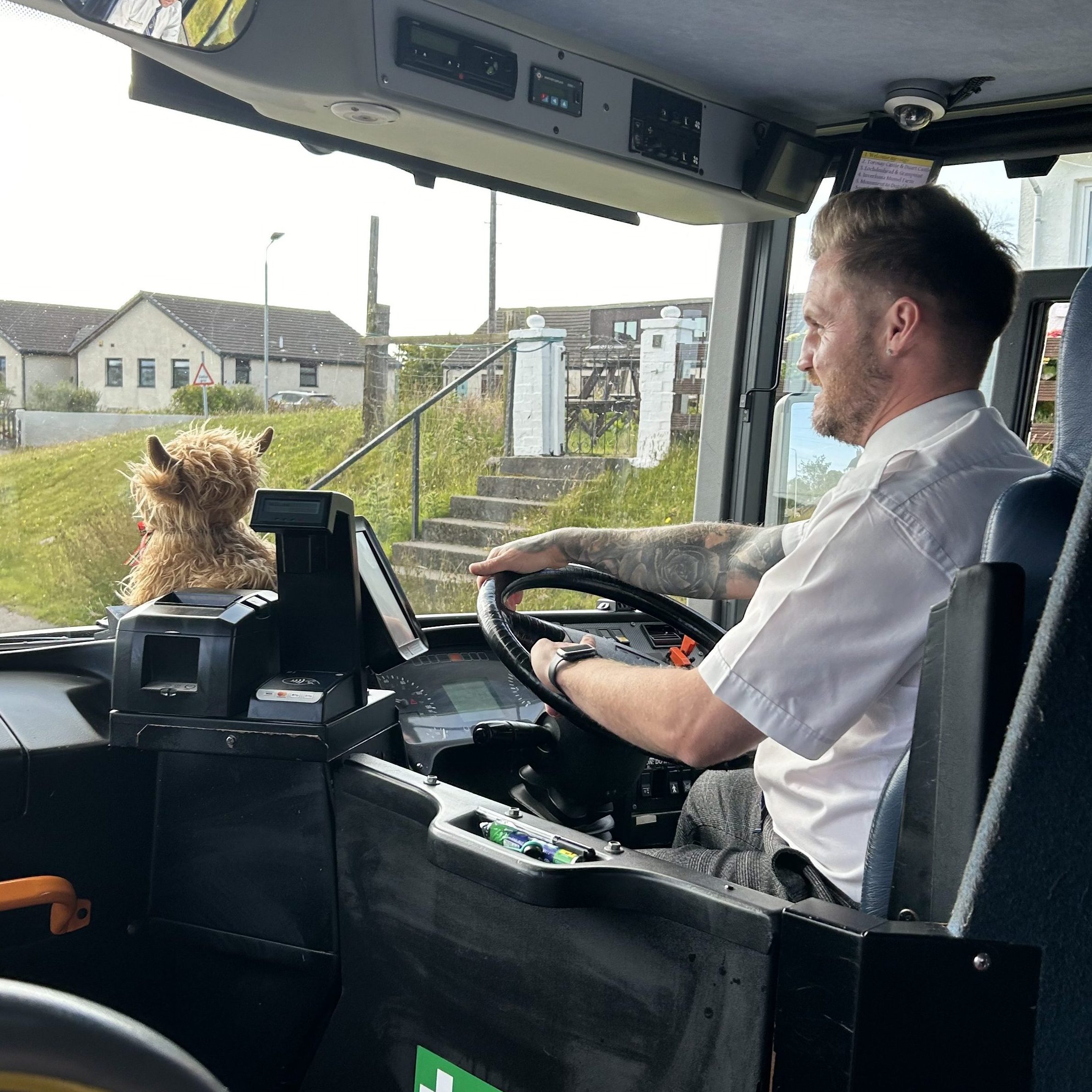
Leaving Iona for Glasgow, we took a quick ferry hop to Mull and then a 75-minute bus ride across its length on a (mostly) one lane road. Our bus driver, Andrew, entertained us the whole way, greeting people out the window, telling us their occupations and bits of their life stories. Passing his own house, he said “Look, there’s me wee dog—and ach, the gate is open!” Shouting at his phone (no hands off the wheel for him), he called his wife to alert her.
Glasgow was our last stop in Scotland. We arrived under the weather, less energized to navigate another new city. On our second night, walking through a quiet neighborhood on our way to an Indian restaurant, we were greeted by a lady wrangling trash cans outside an Episcopal church. Our American accents outed us at once, so she asked how our holiday was going. I mentioned how much we’d been enjoying the people, but confessed that she’d been the first in Glasgow to speak to us. “That’s terrible,” she exclaimed. “You should come in for a cup of tea!” Clearly, she meant it, and had we taken her up on the offer, I’m sure it would have been a fabulous conversation. Just minutes from our dinner reservation, we declined, but were comforted to know that, even in the big city, Scottish folks have open doors and open hearts.
Of course, it’s not just the Scots. Regional cultures vary, but people are people and warmth abounds. Catching a glimpse into the lives of some of God’s other children and discovering fond connections there is one of travel’s great gifts.
How to open myself to such delightful encounters when not protected by travel’s anonymity—now there’s a question. How to be one of those people for those I encounter back home is an even better one.
How might you open yourself to a delightful encounter today?
Puffins on Staffa (photo courtesy of Charlie Eisenmann, who got closer)








 Christine Marie Eberle