Spirituality, Travel, Writing

The Pelican

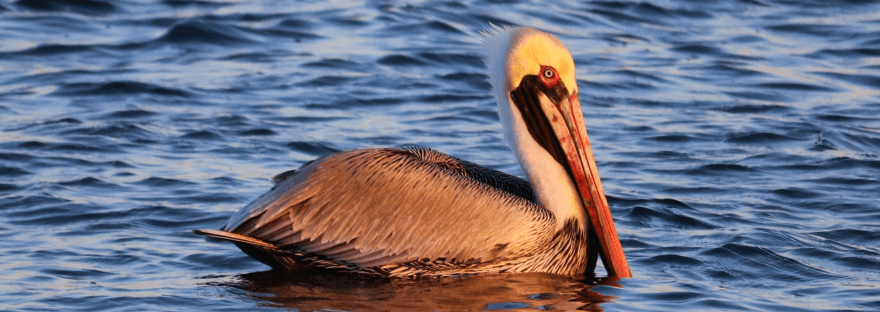
“There’s something wrong with that pelican,” I said. My husband and his brother and I had just completed half of an annual tradition: a Thanksgiving weekend beach walk on Marco Island, FL. We’d just reached the southern tip of the island and were preparing to turn around when I spotted the bird.

It had landed in a crevice between rocks on the jetty, presumably pursuing prey, but then it kept hanging out there in a most un-pelican-like fashion. Maybe it was just resting? (Porter and I did once see a hummingbird–one of those those masters of perpetual motion–sit in a tree for several minutes!) But then the pelican raised its wings as though intending to fly, yet did not achieve liftoff. It settled back down, tried again a minute later, and a minute after that. Something was definitely wrong.

I didn’t know which direction the tide was headed, but if nothing changed, eventually the water would be over the bird’s head. I kept hoping someone would notice . . . the man fishing off the end of the jetty, perhaps, or the woman collecting shells at the water’s edge. But the pelican was camouflaged, brown against brown, and each person walked away, unseeing.

Finally, another man and woman picked their way across the rocks, fishing poles in hand, and the pelican’s struggle caught the woman’s attention. She called her partner over, and together they snapped into action. He reached down and grabbed the end of the creature’s long, prehistoric beak, holding it firmly shut, while she pulled a knife from her pocket and went to work on the fishing line that had entangled the bird.
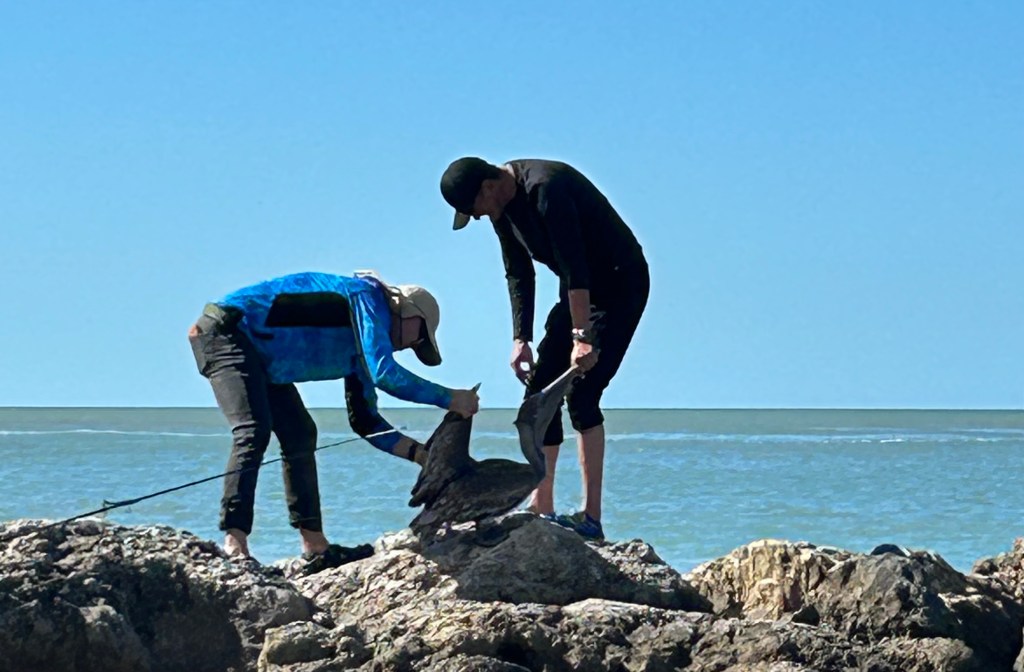
It wasn’t quick; the pelican’s thrashing had only made matters worse. But she kept at it, patiently, and the bird submitted to her care. Once they were satisfied that no strands remained, the man let go and the bird flew off, to applause from the small crowd that had gathered to watch.

The pelican landed in the water just a few yards away and remained there. Was it injured? Periodically, it gave a big flap of its wings without gaining altitude. Maybe the formerly trapped wing was damaged. Perhaps the bird was waterlogged from its captivity in the crevice, or maybe it was just stunned, trying to get its bearings. It really was time for us to turn around, but I couldn’t stop watching.

You know the story has a happy ending, right? Eventually, with a few strong flaps, the pelican lifted out of the water and flew an enormous test-circle, practically buzzing its rescuers as it passed the jetty. They noticed, and pointed, and the beachgoers cheered again.

The story didn’t stop with the rescue, though. As the pelican floated there, gathering strength, the couple was gathering all the old fishing line they could find among the rocks, eventually amassing armloads. It wasn’t their mess, but they cleaned it up anyway.

It wasn’t their mess,
but they cleaned it up anyway.

These days, when so much of the news makes us heartsick (yet unable to look away), what a relief to witness a reminder of the basic goodness of humanity.

This is the point in a blog post where I’d ordinarily launch into a little lesson. I’d unpack the pelican story, musing about our Advent call to be attentive, perhaps, or to help others with the gifts and skills God has given us, or to care for creation, or to leave a place better than we found it. But honestly, I think this story speaks for itself.

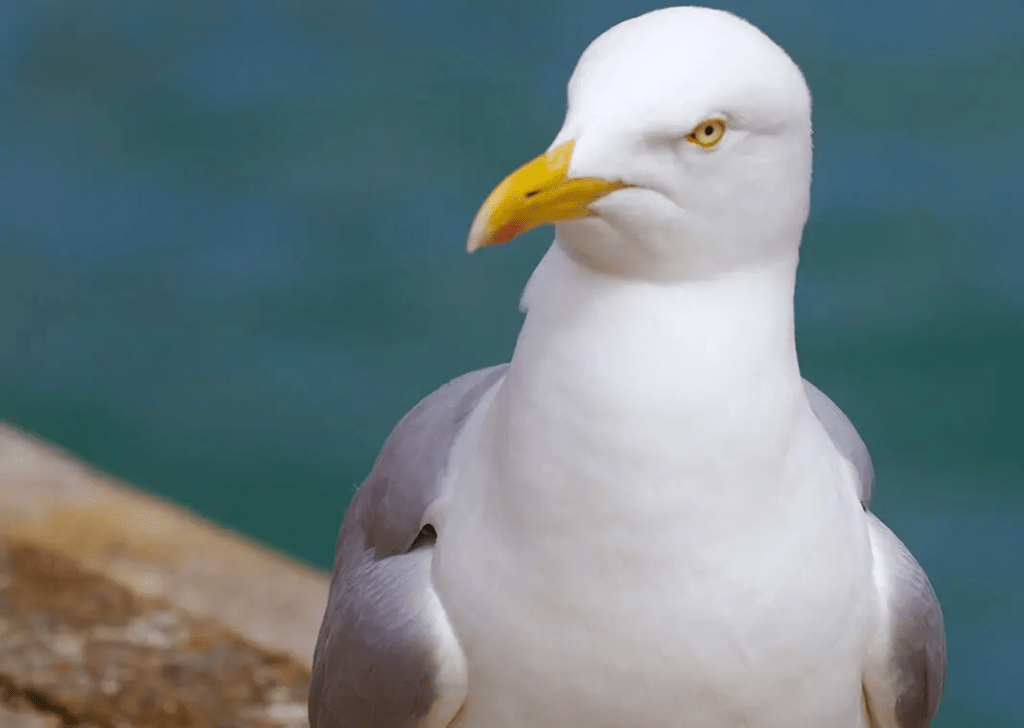
More importantly, Eric Clayton has already written that essay, in a beautiful post from Ireland called “The Man Who Untangles Seagulls.” Different coast, different bird, but a similar (amateur) rescue, which led Eric to muse about our call to show up in the moment and respond as best we’re able. Click the image below to read it!
“The Man Who Untangles Seagulls” by Eric Clayton at IgnatianSpirituality.com

May you reap the blessings of attentiveness, this Advent and always!

Travel, Writing

Train Time

When Porter and I decided to take Via Rail across Canada, we had no doubt we’d enjoy ourselves. We love train travel, and the sleeper-car experience was a real “bucket list” item for each of us. I was a little worried about how I’d handle the absence of WIFI on the Canadian, but mostly I was just curious about the outer and inner journeys. Here’s what I discovered . . .

Large Vistas and Small Spaces

Canada is vast. The province of Ontario takes two days to traverse by train, with nothing but evergreens and lakes flying by the window. Manitoba and Saskatchewan come next, all prairies and farmland. Then it’s Alberta, gateway to the Rockies, which are so much bigger than my east coast existence prepared me for. Across Alberta then into British Columbia and down through Washington, we beheld forests, mountains, and even glaciers of enormous proportions. Everything was gorgeous. It was hard to peel my eyes away.

And yet, the snug scale of train life was also a pleasure. Even though we’d packed lightly for the extended trip, we could only bring into our compartment the things we absolutely needed on the train. Comfy clothes, in layers. A few books and crossword puzzles. Toiletries. Travel mugs. The compartment provided enough nooks and hooks for us to have a place for everything. It felt like a small private room in a (gently rocking) retreat house. We could venture over to the dining car, lounge car, and dome car, but that was the extent of our world for four days. I was blissfully content.

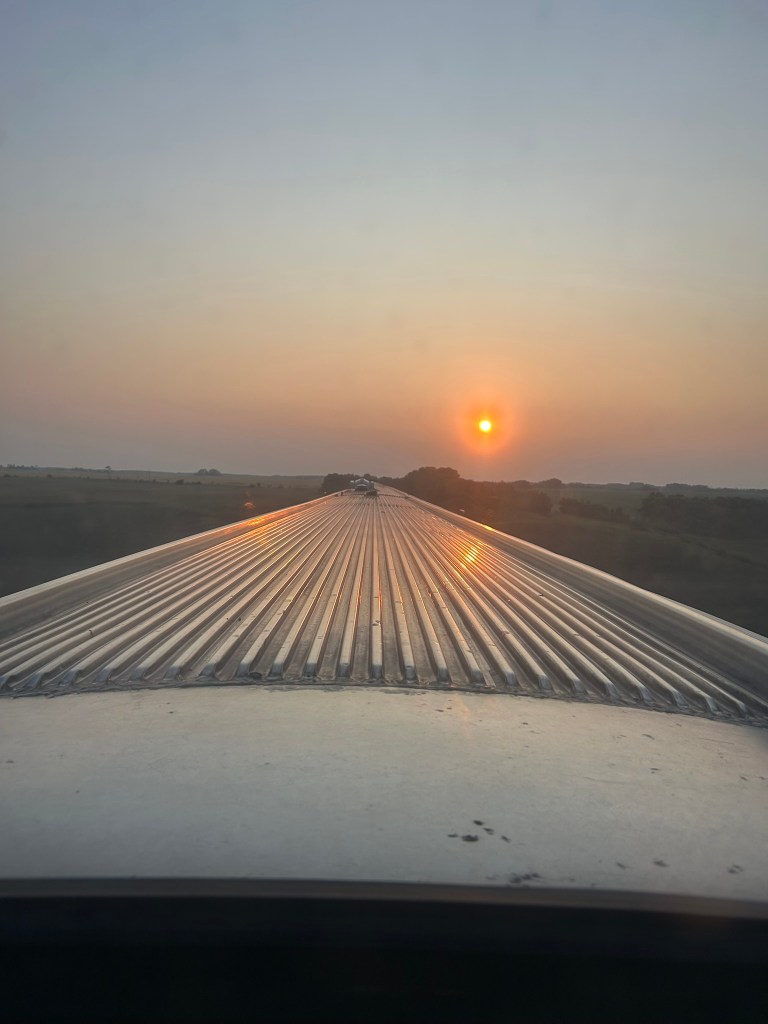
In my last blog post, I reminisced about mornings at the Jersey shore before laptops and smart phones, when “I’d rise first, slip out of our room, brew the coffee, head to the deck, pray and/or journal, then get comfortable with whatever novel I was reading. Presently, the sliding door would open and there would be Mom, coffee in one hand, novel in the other.” Mornings on the train were remarkably similar, except I’d take the thermos of coffee I’d prepped the night before to the darkened dome car and pray while watching the train’s headlights illuminate the landscape ahead. Presently, Porter would slide into the seat next to me so we could watch the sun transform the pre-dawn sky together. It was a beautiful reminder of God’s slow and steady work, even in the darkness of our lives.

Sunrise out the rear window of the Dome Car
Continue reading “Train Time”
Spirituality, Travel, Writing

An Analog Adventure Awaits

Yesterday morning, I found myself missing the oddest thing: not having a laptop.

Let me explain. For more than thirty years, at least one morning in August has found me on the deck at my uncle’s beachfront condo in Wildwood NJ, drinking coffee and watching the sunrise. Yesterday was one of those days. I was resisting the pull of my devices, temporarily keeping at bay the emails to read, the editing to do, the blog post to write. In prayer, I let images of previous years on that deck wash over me, until I settled on a particularly fond memory: vacation mornings when my mom was still alive.

Wildwood Deck, circa ???

I’d rise first, slip out of our room, brew the coffee, head to the deck, pray and/or journal, then get comfortable with whatever novel I was reading at the time. Presently, the sliding door would open and there would be Mom, coffee in one hand, novel in the other. We’d talk a while, then sink into our books until the sun drove us back into the air conditioning.

Mom died in 2007, before everyone was schlepping their MacBooks to the shore, before anyone but the earliest adopters had a smartphone. Unless I brought some thinking to do, there was simply no such thing as working on vacation. What a luxury!  Although I appreciate the flexibility of my freelance existence, the danger—as I’m sure you well know—is that work-from-anywhere easily morphs into work-from-everywhere, devouring the very notion of down-time.

That’s why I’m very excited about the week ahead.

Tomorrow, Porter and I fly to Ottawa to begin a bucket-list adventure: traveling across Canada by train. Picture a sleeping compartment, dining car, observation lounge, the works!  There will be only one thing missing, I discovered as I read the fine print recently: there is no WIFI on the Canadian. I wasn’t going to be bringing my laptop anyway (in the interest of traveling light), and since international roaming is wicked expensive on my mobile plan, I’m just going to have to pass the time the old-fashioned way.

I’ll confess, I’m equal parts psyched and anxious. I’ve probably packed too many books; for months, I’ve been curating train-worthy paperback novels I can leave behind as I finish. (More, of course, are downloaded on my various book apps.) Should I choose to write instead of read, I have a notebook (the analog variety), plus I’ve saved the last several Sunday Times crossword puzzles. We have a deck of cards. There will be three meals a day, with people to meet across the table at each, and of course there’s the sleeping, but still . . . even if the train runs on time (which we are assured it will not), it’s a 96-hour, four-day journey without WIFI.

I can’t wait to tell you all about it . . . but I must! Stay tuned for stories from the far side.

May your own August days come bearing whatever graces you need.

Christine

Book Tour, Pilgrimage, Spirituality, Travel, Writing

Pilgrim’s Progress

I’m grateful to my Jesuit Media Lab friend Alli Bobzien for pitching and writing this beautiful review of Finding God Along the Way, which just posted in Today’s American Catholic. I’ve never had a book reviewed before! Two others may be pending, but props to Alli for being first across the finish line.

You can read more of her wonderful writing at The Pondering Heart.

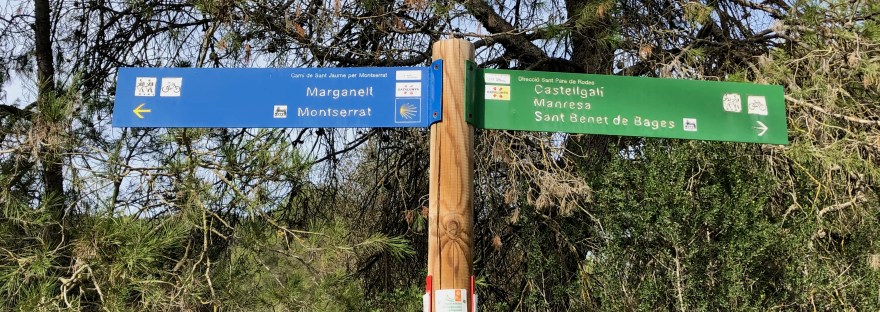
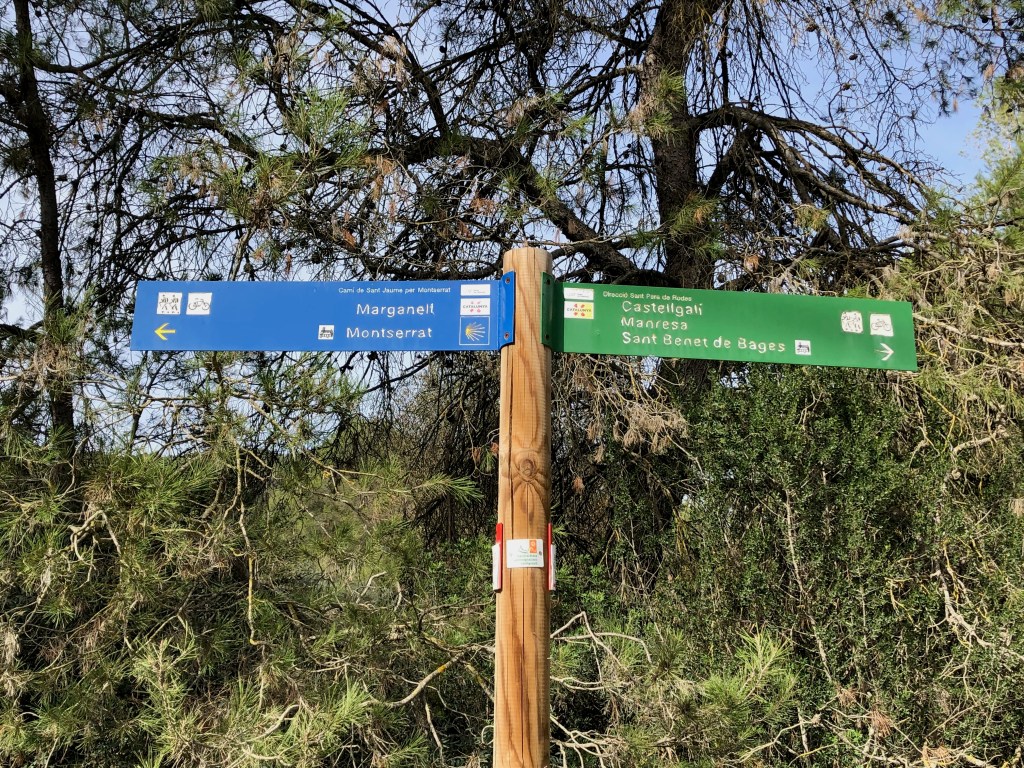
Waysign glimpsed along our lengthy trek from Montserrat to Manresa
Book Tour, Pilgrimage, Spirituality, Travel, Writing

Join my Conversation with Leah Jones of Finding Favorites

This is my second time as a guest on Finding Favorites (here’s the first), and I must say that Leah Jones is a fabulous interviewer, for two reasons you’ll discover when you listen:

1) She walks me through the whole pilgrimage (no pun intended), asking great questions about the logistical and emotional aspects of our month-long adventure. I did not have any of those questions in advance, but quickly realized I could count on Leah to take the lead, allowing me to be fully present. (A very pilgrim-y experience!)

2) She brings her whole self to the conversation, from her Jewish faith to her cancer diagnosis. Even though I’ve only spoken with Leah twice in my life, recording the podcast felt like sliding into a diner booth with an old friend, skipping the superficial chit-chat and diving right into what really matters.

So, slide on into that booth with us and enjoy!

Click the image or link above to listen!

P.S., While you’re on Finding Favorites, see who else Leah Jones has interviewed; the conversation with her former rabbi was quite delightful.)

Book Tour, Pilgrimage, Spirituality, Travel, Writing

Join my Conversation with Eric Clayton & Brendan McManus SJ

My gosh, did I have fun with this one. Fr. Brendan McManus’ The Way to Manresa helped prepare my heart for pilgrimage, and his newest gem, Living the Camino Back Home, is a filled with good advice for how to sustain one’s pilgrim heart. (Also, he kindly blurbed my book; what a guy!)

We shared stories and insights in a rich hour’s conversation with talented interviewer Eric Clayton. (That hour was preceded by almost half an hour of tech troubles, which may be why we sound so comfortable with one another!)

You can play straight from the image below, or visit the AMDG show notes for more information about the podcast and Fr. McManus’ books. (And while you’re there, you can check out the many other awesome AMDG episodes.) Enjoy!

Book Tour, Pilgrimage, Spirituality, Travel, Writing

Podcast Season: Join My Conversation with Mary Fran Bontempo

My book is in the wild, so you know what that means . . . It’s podcast season! I’m grateful to my friend Mary Fran Bontempo for being first out of the gate with this fun conversation. Click the image below to listen.

Note: Mary Fran’s latest book, From Broken to Brilliant, made my 2024 list of Books I Love by People I Love. Check it out!

Image by Basil Smith from Pixabay
Book Tour, Spirituality, Travel, Writing

Live Interview!

Just before Christmas, the Catholic Faith Network interviewed me about my forthcoming book. While I’m always happy to talk about Finding God Along the Way, maintaining “eye contact” with the red dot at the top of my screen as instructed was challenging! How’d I do?

Book Tour, Service, Spirituality, Travel, Writing

Brendan McManus, SJ

Part of the Thankful Thursday Series

As I prepared to walk the Ignatian Camino—knowing I was planning on writing about it—I tried not to read many other Camino memoirs.  I wanted to reach my own insights, free from the risk of parroting someone else’s. I made an exception, however, for Irish Jesuit Brendan McManus’ marvelous work, The Way to Manresa: Discoveries Along the Ignatian Camino. I’m so glad I did!

Brendan McManus, SJ

The book narrates the experience of a priest who had walked the Camino as a young man and set out to do it again after an exhausting stint of suicide-bereavement ministry.  His hopes were thwarted when he fell and sustained a serious injury on the second morning of his solo journey. He pressed on (with the approval of a medical center) for several days until pain forced him to abandon the walk. He used public transportation to visit highlights of the Way before returning home, where the search for answers continued. 

While it may be hard to imagine getting a whole book out of a pilgrimage cut off at the knees (no pun intended) on Day Two, McManus’ account of the spiritual wrestling match brought on by pain and disappointment makes this a worthwhile read for anyone dealing with an unexpected and unwelcome turn of events.

McManus’ account of the spiritual wrestling match brought on by pain and disappointment makes this a worthwhile read for anyone dealing with an unexpected and unwelcome turn of events.

I later learned that Fr. McManus is a prolific author, and that most of his books have to do with the “other” Camino—the famous one, the Camino de Santiago (Way of St. James). He is currently based at the Manresa Spirituality Center in Dublin, but spends time each summer back in Spain, supporting other pilgrims through the Camino Companions program.

His latest book, co-written with Katherine O’Flynn, FCJ, is called Living the Camino Back Home: Ignatian Tips for Keeping the Camino Spirit AlivePublication date is December 5, but if you’re free tomorrow afternoon (Friday, November 15, 2:00 Eastern) you can see McManus in conversation during a live book launch event.  I just registered (at no cost) and hope you will too!

Brendan McManus could not have been kinder or more encouraging when I reached out to him about my book.  Here’s what he said:

Christine has done a wonderful job of distilling the essence of pilgrimage and integrating Ignatian Spirituality into a wonderfully engaging narrative. With a lovely light touch she manages to capture the daily struggles and challenges (bags, beds and blisters!) that make for the essential inner journey that mirrors the outer journey in Ignatian Spain. This book beautifully illustrates Ignatian themes of trust, freedom and listening to the Spirit. A great Ignatian pilgrim read!

For this living witness that “everything has the potential to call forth a deepening of our life in God” (a la Ignatius), I am truly grateful.

Spirituality, Travel, Writing

José Luis Iriberri, SJ

Part of the Thankful Thursday Series

The route that Ignatius took from Loyola to Manresa has existed for 502 years now, but the Ignatian Camino in its present form would not exist without the extraordinary commitment of Fr. José Luis Iriberri, Director of the Office of the Ignatian Camino. In addition to organizing and physically leading trips spring through fall each year, he has co-authored (with Chris Lowney) two Camino books:  On the Ignatian Way and Guide to the Ignatian Camino. And now, you can see him for yourself—along with many of the places featured in my book—in a 90-minute YouTube documentary that premiered this summer!

Fr. José, on the Way!

A quick word search of my manuscript reveals that I mention him more than 150 times in 187 pages; clearly, he was an integral part of the experience!  Here’s an excerpt from Chapter 43: “In Praise of Our Fearless Leader.”

Perhaps the shortest and most accurate thing I can say about José Luis Iriberri, SJ, is that he is a true son of Ignatius. (He even looks like the saint, being of Basque descent and cultivating a bit of an Ignatian beard!) He is intimately familiar with the path Iñigo traversed, pointing out churches where he worshipped, buildings where he conducted business, and hostels where he might have stayed.

It is one thing to know about Ignatius, however, and quite another to know Ignatius and to model one’s life after him. That is the experience of traveling with this man: the sense of being in the company of one of Ignatius’s close companions as he guided us through both the outer and inner landscape of the Camino. He was our spiritual guide, in every sense of the term.

Backpack on, walking stick in hand, he moved like a mountain goat, lightly, over any kind of terrain, knowing every twist and turn of those hundreds of miles—most of which he had marked by hand. But he also knew the contours of our hearts, watching us carefully, listening closely to what we said and didn’t say, reading our faces, and offering sage observations. He knew when to encourage a flagging pilgrim, when to offer a bit of respite, when to break the tension with a droll remark, and when to put his foot down if someone’s ambitions exceeded their abilities. Though he could grow exasperated with our ridiculousness, he was completely attentive and caring the moment someone manifested a genuine need.


José’s helpfulness has continued since our return. When the first draft of my manuscript was complete, I sent it to him for fact-checking.  Just a few days later, I received the electronic document back, marked up in red ink in his own hand.  He caught many errors—from place names I’d gotten wrong to bits of Spanish history I’d misunderstood—which I gratefully corrected. (He also inserted comments like “Oh I don’t think I said that” and “the walk didn’t really take that long,” which I took under advisement.)  He’s even helped with the audiobook: when I discovered a bunch of words in Euskara and Catalan that I wasn’t sure how to pronounce, I sent him a list and he read it into a voice memo for me! The book is so much better for his attentive care, as I was better for his attentive care along the Way. 

The book is so much better for his attentive care, as I was better for his attentive care along the Way.

He also shared these kind words:  Christine catches the spirit of the pilgrimage, living the full experience in her own body and soul and bringing an open mind to both the obstacles and wonders that pilgrims may encounter along the Way. This book will help you to understand the gifts that you would find walking freely in Spain, following the steps of Saint Ignatius of Loyola, a saint who lived five hundred years ago but experienced a transformation that is most needed in our twenty-first century.

For this walking example of loving God with one’s whole heart, soul, mind, and strength, I am truly grateful.