
BLOG

Scripture, Spirituality

How Long Does it Take to Change?

This season, I am loving Ann Garrido‘s Lenten devotional “The Living Gospel” from Ave Maria Press.  We’re only five days in, of course, but so far each pithy, insightful observation by the author of Redeeming Conflict and Redeeming Administration has kept me ruminating all day.

On this first Sunday of Lent, Ann wrote about the fact that “These Forty Days of Lent” aren’t actually forty days (go ahead, do the math).  Forty is more of a symbolic number.  I knew that the biblical forty generally stands for “a really long time” (think of the Israelites’ forty years in the desert, or Jesus’ forty days in the desert, or the forty days from Easter to Ascension).  But Ann took it a step farther, explaining that the number forty in the Bible represents “the length of time it takes for a change to be complete and something new to begin.”

Wow.

Then, at St. Vincent’s this morning, Fr. Tom McKenna preached about “disruption” as a necessary ingredient in change.  When the Spirit drove Jesus into the desert, he suggested, it was more of a “divine shove” than a gentle invitation.

This makes sense to me.  Change does not come easily to most of us.  Often we are pushed into circumstances not of our choosing: the disruption of illness, or trauma, or other external life change.  The internal change (spiritual growth) follows after, if we can open ourselves to the invitation buried in the disruption.  Only then can something new begin.

For many years now, I’ve been encouraging people to “lean into life” during Lent.  “Choose your sacrifices” I say, “but draw close to God in the sacrifices life chooses for you.”  This year, I want to pay attention to disruption: the things that break in and get my attention against my will.  What is God inviting me to through them?   How am I being called to change?  And how long will my forty days be?

The concept of change is something I am itching to explore in a next book (#2 or #3, I’m still not sure). How have I changed over the years?  What made lasting change possible?  Now that I’m less than two weeks out from my editing deadline for Finding God in Ordinary Time, I have this fantasy of having time to re-read the dozens of journals I’ve kept over the years, tracing the origins of what eventually became my firmly held spiritual beliefs.  We shall see.

For now, I just want to keep leaning into life, being present to the demands and disruptions of each day, and marveling at the goodness of God–and other people–in the midst of it all.


And speaking of the goodness of other people . . . thank you to everyone who weighed in last week on my chapter title.  I chose “Finding God in an Outstretched Hand,” in part for the ambiguity of it.  Whose hand are we talking about here?  That of a beggar at the Basilica, or my own?  Or the reader’s?  Thank you to Ann-Therese Ortiz (old friend, spiritual director, and generally wise woman) for the suggestion.  I can’t wait to inscribe your book!

Blessings to all in this holy season.  May each of your ordinary days be extraordinarily blessed!

– Christine


Liturgy, Spirituality

On Valentine’s (Ash Wednes)day

You know I love Ordinary Time, but Lent’s nice too!  Here are my musings from today’s services at Gwynedd Mercy University.

Well here it is, Valentine’s (Ash Wednes)day.

Valentine’s Day, of course, is always February 14, but there are 35 possible dates on which Ash Wednesday can fall (36 in a leap year): anywhere from February 4 to March 10.

And yet the last time it fell on February 14th was 73 years ago, in 1945. (But get used to it; it’s going to happen twice more in the next eleven years.  Maybe God’s trying to send us a message!)

I’m not sure what the percentage of overlap is between people who care about Ash Wednesday and people who care about Valentine’s Day. Probably not as much as the Internet would have us believe. But if you Google “Ash Wednesday and Valentine’s Day,” the search results are pretty alarmist:

  • Feast or Fast?!?
  • Ash Wednesday falls on Valentine’s Day, but meat ban still in effect, Catholics told!
  • Valentine’s Day falls on Ash Wednesday, but you still have to practice the faith, religious leaders say!  (Thanks for that, Chicago Tribune.)

But the more I think about it, the more I think it’s actually not a conflict. And those who would make us believe it is are probably misunderstanding both days, and selling us—literally—on a very artificial, commercial understanding of love.

Every February, we’re told that we should “say it with flowers,” and the price of roses shoots up. Grocery stores’ seasonal aisles fill—on the day after Christmas—with giant heart-shaped boxes of chocolate.  Jewelry stores run commercials featuring gifts in the the “now I know you love me” price range.

But real love – romantic or otherwise – has never been about that stuff.  If you think about it, real love is much more akin to the three disciplines of Lent—prayer, fasting, and almsgiving. Hang in there with me while I look at the three traditional practices of Valentine’s Day, and compare them with those of Lent.

Practice #1) Saying it with Flowers.
Whatever the “it” is that needs to be said, I’d rather have the words. Sincere words / meaningful conversation / shared vulnerability—things that don’t wither up and die by next Wednesday. It’s what we need in our personal relationships, romantic or otherwise, and it’s what we need in our relationship with God. Showing up. Saying what we feel. Listening for the response. Being vulnerable before the One we love.  That’s a pretty good description of prayer; what a wonderful way to spend a little extra time with God this season!

Practice #2) Buying Giant Boxes of Chocolate.
I do not understand why chocolate is invested with so much power—THE symbol of Valentine’s Day and THE thing to give up on Ash Wednesday for the rest of Lent. Real love is always more about sacrifice than consumption. And by sacrifice I don’t mean “Oh no, I can’t eat that; it’s Lent!”  I mean that we give up stuff for each other all the time. Parents give up sleep for their infants; teachers give up weekends for grading their students’ papers; housemates give up five minutes on the couch to actually do the dinner dishes; students give up whatever they were going to be doing when a friend needs a ride or a shoulder or a study partner. That’s the spirit in which we can frame our Lenten sacrifices, too . . . not setting up some sort of Olympic hurdle for ourselves, but simply asking what we can “give up” for a time in order to create more space in our hearts / minds / lives / schedules, so that we can be less self-indulgent, more responsive to the needs of those we love and, more importantly, those God loves (which is everyone).

Practice #3) Giving Expensive Jewelry.
TV commercials would have us believe that love is best expressed with a jaw-dropping price tag. We know that’s not true. But real love is generous. Love is open-eyed and openhearted. Love sees the need. The need of the person right in front of us, and the needs of people we will never meet. Love sees the need and responds—sometimes with money, other times with attention or service or time. Lent invites us to that kind of generosity, and calls it almsgiving.

So as we move into the season of Lent, go ahead and let this Valentine’s Ash Wednesday set the tone.

  • Carve out quality time with the God you love.
  • Give up something that gets in the way of your freedom to love.
  • And let that love overflow with generosity.

What could be more appropriate?

Service, Spirituality, Writing

Who Can Help Me Name This Chapter?

Friends, I have a dilemma.  It has come to my attention that the working title for Chapter 16 of Finding God in Ordinary Time is problematic.  To those who get it, it makes perfect sense.  To those who do not, it’s baffling.  (This is not what I’m shooting for.)

Here’s the chapter, which I originally intended to share on this last Sunday of Winter Ordinary Time simply as a nice segue to Lent, with its invitation to almsgiving.  At the end I will tell you what I called it, and ask for your suggestion.  Obviously, a free signed copy is yours if you come up with the winning chapter title!


Chapter 16:  Finding God in . . . ?

How do we decide what to give?

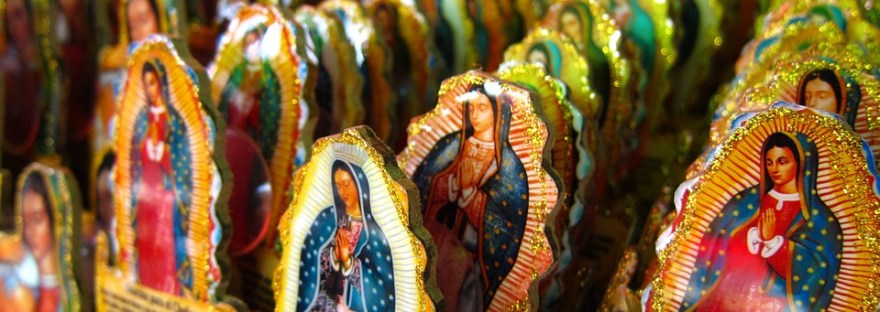
In my years as a campus minister I’ve been fortunate to travel to Mexico City with students many times. One of the problems for the tourist there (as for urban pedestrians just about anywhere) is how to respond to people who are begging. So often in Mexico City I encountered tiny crones sitting on the sidewalk, wrapped in dirty blankets, heads down in sleep or shame, one calloused hand extended for passersby to see. They gave no accusing stare to those who passed them by; they didn’t confront us with a fast-talking pitch or a conscience-prodding sign. They simply sat immobile for hours, murmuring  heart-wrenching blessings to strangers who paused to press a coin into their palm.

On my first visit I often found myself unprepared to give: the airport currency exchange had doled out maddeningly large bills, difficult to break even at small local shops. And so, the next time, I secured a supply of ten-peso coins. Each was worth about a dollar; they were easy to carry in my pocket (unlike bills that had to be fished from my travel wallet) and satisfying to bestow. A nice solid coin. I roamed about the Basilica of Our Lady of Guadalupe like a trippy fairy godmother, never passing one of those dear old souls without giving a coin and receiving a blessing in return.

But was that praiseworthy? If I compare giving to not giving, sure. But if I compare what I had, even on my person, to what those ladies needed . . . ugh. The logical part of me protests that even had I emptied my bank account to help those women (that is, sold everything I had and given to the poor), I might have had treasure in heaven, but there would still be an awful lot of poor widows in Mexico City. Yet that observation, however true, does nothing to uncomplicate my feelings about my peso-giving choices.

Nor should it.

Whenever students and I talk about this, I first make sure they understand that the systemic and sociological factors at work in poverty are vast and complicated, but can be addressed. (Perhaps one of them will graduate and do just that.) Then I explain the concept of tithing, and encourage them to commit to supporting charities that address underlying causes as well as immediate needs. I let them know that, whatever they decide, the important thing is that they respond thoughtfully.

And finally I take away any tidy bow they were hoping to tie on the lesson by telling them this: From a spiritual perspective, we should never grow comfortable with the discomfort of others—even when we feel like we’re down to our last two coins.


Well there you have it.  My original title?  Finding God in the Widow’s Mite.

It you can think of a title that captures the message of this chapter more clearly, please leave it in the comment section below.  The only “rule” is that it has to start with the words “Finding God” and then the preposition of your choice.

That’s the end of my sneak peeks for a while; liturgical Ordinary Time returns in fifteen weeks.  I am going to try to keep up with the Sunday blog posts, though; this has been fun!  I anticipate some significant book announcements in the next few weeks, so stay tuned, and do follow this site if you’re not already.

May each of your ordinary days be extraordinarily blessed!

 – Christine

Spirituality

Finding God in the Cafeteria

How did you get started in public speaking?

The question came at the end of a presentation I had just given in a parish cafeteria in front of almost a hundred women. I chuckled as I realized that the answer began when I was a tongue-tied teenager in another cafeteria almost 40 years earlier.

It was the first day of high school, and my family had just moved into the neighborhood. I was terribly shy and didn’t know a soul, whereas most students had arrived with classmates from their grade schools. I was assigned to third-period lunch but had no idea where to sit, so I just stood there, lost amid a chattering mass of ponytails and perms.

Suddenly a face came into focus right in front of me. I noticed you were in my first two classes, the girl said. Would you like to sit together?

Kathy—still one of my dearest friends—does not remember that moment, though I’ve retold the story countless times in her presence. But for me our encounter was a pivot; it altered my path dramatically, in more ways than one. Kath was joining the speech and debate team because her big sister was on it. I was happy to follow my new friend anywhere, so I joined, too, and this formerly tongue-tied teenager spent the next four years honing her speaking skills in competition and on stage. I located my voice, and now I preach, perform, even sing in front of crowds. Where would the road-not-taken have led? I don’t know, and I don’t want to. I do know that I will never stop thanking my friend for her moment of spontaneous generosity. I am writing this on Kathy’s 52nd birthday, praying that joy will continue to come her way in as much measure as her kindness brought me.


This story is an excerpt from Chapter 12 of Finding God in Ordinary Time.  This had to be my post this week, since I wrote it on Kathy’s birthday exactly one year ago today.  My dear, beautiful, accomplished friend is now the Executive Director of The ARC / Baltimore.  We may be Kathleen and Christine to the rest of the world, but between us we will always be just Kath and Chris.  Love you, chickie!

Kathleen-Durkin-full-headshot-for-web.jpg
Kathleen Durkin

May each of your ordinary days be extraordinarily blessed.

– Christine

Next Week:  Finding God in the Widow’s Mite

Service, Spirituality, Volunteering

Finding God in a Flowered Housedress

I do love the story that appears in this chapter of Finding God in Ordinary Time.  I’ve been telling it for years, in the wake of a particularly moving encounter on an Alternative Spring Break experience in Savannah, Georgia in 2009.  Since Gwynedd Mercy’s own ASB teams just started their 2018 adventure, it seemed like a good time to post it.  To them I say:  May each of you find–and remember–your Rose!


Chapter 8:  Finding God in a Flowered Housedress

I have called you by name: you are mine. — Isaiah 43:1

Rose was scary. And she was scared.

She hovered in her bedroom doorway in a flowered, old-lady housedress and ratty slippers, her chopped-off hair looking like it had been styled in an asylum. Eyes full of suspicion, she peered anxiously at the do-gooders who had come to mess up her apartment. But it was that or eviction.

I was the head do-gooder, sent by Rose’s social worker along with four of my students as part of an alternative spring break service experience. The apartment had descended into filth and chaos, we’d been told, since Rose’s “boyfriend” had been transferred into assisted living. The landlord was ready to bounce her, so it was our job to make the place habitable—and not just for the many roaches scurrying through the cabinets.

I was so proud of my students that day. They donned gloves and tackled that awful kitchen with good cheer, emptying cabinets, throwing out contaminated food, and washing every sticky surface. I had the far easier task of organizing the living room: tossing discarded food wrappers, newspapers, and tissues; organizing anything that looked worth keeping; dusting everything I could get my hands on. There weren’t as many roaches to be alarmed by, but there was Rose, watching me with alarm. She didn’t respond to any overtures so I went about my business quietly under her apprehensive gaze.

How is this her life? I found myself wondering. Having been blessed with what I considered a full and meaningful life, overflowing with friends and work, travel and adventures, I was increasingly distressed by the emptiness of this poor woman’s existence.

And then I found it. Hidden among TV Guides and junk mail was a birthday card, the kind you get at a dollar store. I peeked inside. My darling Rose, someone had written, I will always love you. — your Bill

My eyes welled up, and I gently placed the card in a prominent position on her freshly dusted end table. To me she had seemed like a pathetic creature, yet she was someone’s darling Rose. She was a social worker’s challenging case, a landlord’s problem tenant, and our Tuesday project, yet a man named Bill had remembered her birthday and had selected, written, and mailed this card with its tender message.

I do believe that we are all precious in the eyes of God. But I was humbled, that day, to realize that a person I could barely bring myself to look at was precious in the eyes of another human being as well—one who had penned the words we all long to hear.

Who do you find difficult to look at, never mind love? Try to imagine them precious in the eyes of God, and even in the eyes of another human being. What shifts inside you?


May each of your ordinary days be extraordinarily blessed.

– Christine

Next Week:  Finding God in the Cafeteria

Retreats, Spirituality, Volunteering

Messengers of Grace

Last Thursday I had the privilege of facilitating a retreat for members of the Ignatian Volunteer Corps / Baltimore region.  IVC volunteers are people age “50 or better” (love it!) who serve 1-2 days a week with a partner agency, using their considerable talents to care for individuals who have slipped through society’s safety net.  Their slogan is “Experience Making a Difference,” and I certainly experienced that difference myself in the course of our day together.  What a delightful, engaged and engaging group of people, seasoned enough to offer wisdom, yet beautifully open to new questions.

We spent the afternoon working with Part Two of my book Finding God in Ordinary Time.  Called Messengers of Grace, Part Two presents surprising encounters with strangers as one of the terrains in which we can spot the presence of God, hidden in plain sight.  As you may know, I’ve decided to give faithful blog readers a peek into my book each Sunday in winter Ordinary Time.  So with gratitude to the IVC volunteers whom I no longer call strangers, this week I want to share my introduction to Part Two.


Part Two
Messengers of Grace

People are beautiful, courageous, and inspiring, but we are also messy, complicated, and fallible.

And yet we are dear to God’s heart. In Genesis—the first book of both the Jewish Torah and the Christian Bible—we learn that all humanity is created in the image and likeness of God. The Qur’an teaches us that God (Allah) is “nearer to man than his jugular vein.” In Catholic Social Teaching, the dignity of each person is the first principle. Quakers affirm that there is “that of God in everyone.”

Ever wonder why so many religious traditions feel the need to point this out?

I love how my friend John puts it: every person we meet contains a revelation of God.

In Matthew 25, Jesus says that whatever we do for “the least of these,” we do for him. Who are these “least”? If we look at Jesus’ list (people who are hungry, thirsty, naked, or ill, those who are strangers or imprisoned), we will see that he clearly identified with those who are most vulnerable.

Sometimes vulnerability is attractive, and sometimes it is repellant, but it is always a place where, if we cock our heads at a certain angle, we can catch the message God wants us to hear.


Who has been a messenger of grace for you?  Tell us your story in the “Leave a Reply” section below!

May each of your ordinary days be extraordinarily blessed.

– Christine

Next week:  Finding God in a Flowered Housedress

Liturgy, Spirituality, Writing

The Most Wonderful Time of the Year

When I was a child, one of my favorite tales was a short story by William Dean Howells called “Christmas Every Day,”  in which a little girl gets her wish to have it be (you guessed it) Christmas every day for one year.

It doesn’t go well.

Because, as it turns out, people can only handle so much merriment, so much turkey and cranberries, so many tummy aches, and so much present-getting and -giving before getting sick of it all.

Continue reading “The Most Wonderful Time of the Year”

Spirituality, Writing

Author Interview

What a treat to be interviewed by Fiona McVie!

fionamcvie1964's avatarauthorsinterviews

Hello and welcome to my blog, Author Interviews. My name is Fiona Mcvie.


Let’s get you introduced to everyone, shall we? Tell us your name. What is your age?

My name is Christine Marie Eberle, and I’m 52 years old.

 Fiona: Where are you from?

I’m from the Philadelphia, Pennsylvania area, and have lived here almost my whole life, though as a young adult I did volunteer service in Richmond, Virginia and then went to graduate school in Boston.

 Fiona: A little about your self (i.e., your education, family life, etc.).

I have a Bachelor’s in Theology and English from Saint Joseph’s University in Philadelphia, and a Master’s in Pastoral Ministry from Boston College.  As a young adult Iworked as an administrator at a street center for people experiencing homelessness, as a hospital chaplain, and even as anexecutive secretary, but those were all just warm-up acts for…

View original post 2,931 more words

Spirituality

What do you want for Christmas?

If I asked you what you want for Christmas this year, what would your answer be?

How would the answer change if I asked you what you long for this Christmas?

While the question of want carries images of glittery store windows, digital shopping carts waiting to be filled at the touch of a track pad, and lists that can be made of items that can be purchased for a price, the question of longing is different . . . deeper . . . more personal . . . less tangible . . . more real.

What are the deepest longings of your heart?

Our culture has no investment in answering that question, because our deepest longings can’t be packaged, marketed, and put on special sale.  And so the “Christmas shopping season” caters to our transient desires as though they were ultimate, and hopes we won’t notice.

The “Christmas shopping season” caters to our transient desires as though they were ultimate, and hopes we won’t notice.

I know what I want for Christmas this year, but it’s not sold in stores.

I want Advent.

The neighborhood may already be awash in blow-up snowmen, while carols play overhead incessantly in every store, but in my heart I know that the remedy for all that fails to satisfy in the hustle and bustle of December lies in the quiet longing of Advent.

Isn’t there something in your soul that longs for stillness instead of frenzy?  For a few lit candles instead of a few thousand blinking lights?  For the chance to sit in darkened silence long enough to sense God’s approach?

Advent is a season of waiting.

Advent is a season of waiting.  That is probably not your favorite thing to do.  It’s certainly not mine.

This December I am waiting for my book contract to be finalized, waiting for my brother to settle on his new house and, most anxiously, waiting to find out Porter’s chemotherapy schedule.  My sweetheart was diagnosed with Hodgkin’s lymphoma in November; everyone says we should expect a cure, but still, this is a new road of uncertain length and terrain.  I’d be much more comfortable if we had a good map (even as I acknowledge that control is the last illusion to go).

We are all waiting for something–probably more than one something.  But waiting does not have to be passive and fruitless and frustrating.  It can be creative, expectant, full of hope and even joy.

Think of Mary in the long months between Gabriel’s astounding announcement and the birth of Jesus.  I imagine that she was eager to hold this miraculous child in her arms.  Yet I also imagine that there was a stillness to her waiting, as she pondered the ways of God in her heart.  And I imagine she learned something that only time could teach her.  That lesson can be ours as well, if we embrace what Fr. Tim Lyons recently called “the gift of deepening darkness in these December days.”

The gift of deepening darkness in these December days

And so this is my prayer–for you, for me, for all of us:  May we carve out some Advent time for ourselves this year.  Seize it.  Sneak off with it.  Whatever it takes. For I am sure of this much:

God’s gift will be better than anything we find under our tree.

Scripture, Writing

Many Paths Up the Mountain

To all who have been waiting for the news (and with apologies for my 24-hour lack of internet access), here it is: Jen Epstein is the winner of Pitch Week X at When Words Count.  Jen’s edgy, insightful, hilarious essays about life as a young(ish) Brooklynite struggling with OCD are collected in her book Don’t Get Too Excited: It’s Just a Pair of Shoes and Other Laments from My Life.  This is an amazing opportunity for Jen, and I’m truly happy for her.

So what about Finding God in Ordinary Time?  

I am excited to announce that I have been offered a publishing contract from Green Writers Press with an anticipated launch next fall!  I’m going to take a beat to ponder and pray, and to consult with people who know the publishing world better than I do.  But I’m thinking that this thing may have God’s fingerprints all over it.  Curious?

Read on . . .

Three summers ago I went on retreat at the Jesuit Center for Spiritual Growth in Wernersville, PA (or God’s country house, as I like to call it).  I spent many hours praying with a book of poetry: Mary Oliver’s Thirst. The poem I savored most is called “Praying;” I even tucked it in at the end of my manuscript as an homage, because it says in just a few precious words (the poet’s gift!) what I have tried to express throughout my book. When I met the judges in August I discovered that Thirst (as well as three of Mary Oliver’s other books) actually had been designed by . . . wait for it . . . Dede Cummings, founder of Green Writers Press and one of the judges for Pitch Week X.

(As I say in the book, I can’t make this stuff up!)

I went into Pitch Week not knowing how it would end but holding the outcome lightly, trusting that good would unfold.  And as I said at the beginning of this journey, there are many roads up the mountain, many paths to God.

Stay tuned!