
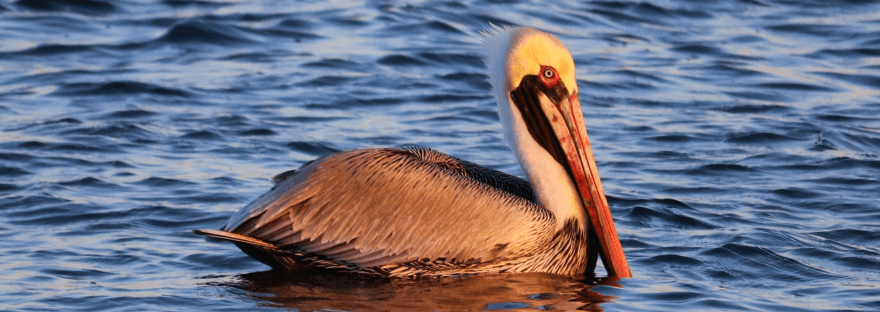
“There’s something wrong with that pelican,” I said. My husband and his brother and I had just completed half of an annual tradition: a Thanksgiving weekend beach walk on Marco Island, FL. We’d just reached the southern tip of the island and were preparing to turn around when I spotted the bird.
It had landed in a crevice between rocks on the jetty, presumably pursuing prey, but then it kept hanging out there in a most un-pelican-like fashion. Maybe it was just resting? (Porter and I did once see a hummingbird–one of those those masters of perpetual motion–sit in a tree for several minutes!) But then the pelican raised its wings as though intending to fly, yet did not achieve liftoff. It settled back down, tried again a minute later, and a minute after that. Something was definitely wrong.
I didn’t know which direction the tide was headed, but if nothing changed, eventually the water would be over the bird’s head. I kept hoping someone would notice . . . the man fishing off the end of the jetty, perhaps, or the woman collecting shells at the water’s edge. But the pelican was camouflaged, brown against brown, and each person walked away, unseeing.
Finally, another man and woman picked their way across the rocks, fishing poles in hand, and the pelican’s struggle caught the woman’s attention. She called her partner over, and together they snapped into action. He reached down and grabbed the end of the creature’s long, prehistoric beak, holding it firmly shut, while she pulled a knife from her pocket and went to work on the fishing line that had entangled the bird.
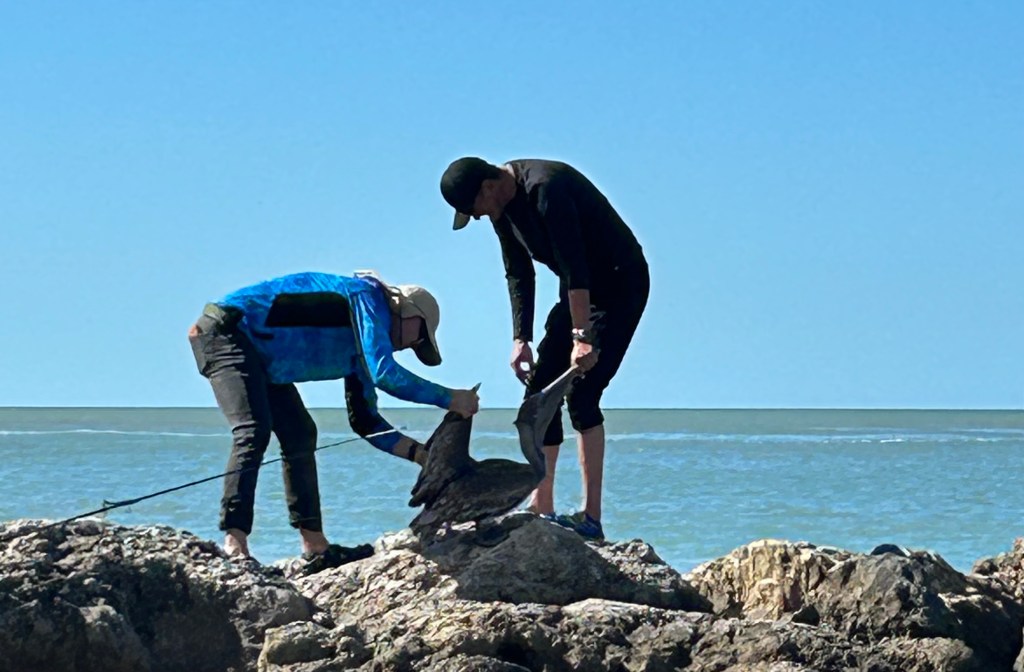
It wasn’t quick; the pelican’s thrashing had only made matters worse. But she kept at it, patiently, and the bird submitted to her care. Once they were satisfied that no strands remained, the man let go and the bird flew off, to applause from the small crowd that had gathered to watch.
The pelican landed in the water just a few yards away and remained there. Was it injured? Periodically, it gave a big flap of its wings without gaining altitude. Maybe the formerly trapped wing was damaged. Perhaps the bird was waterlogged from its captivity in the crevice, or maybe it was just stunned, trying to get its bearings. It really was time for us to turn around, but I couldn’t stop watching.
You know the story has a happy ending, right? Eventually, with a few strong flaps, the pelican lifted out of the water and flew an enormous test-circle, practically buzzing its rescuers as it passed the jetty. They noticed, and pointed, and the beachgoers cheered again.
The story didn’t stop with the rescue, though. As the pelican floated there, gathering strength, the couple was gathering all the old fishing line they could find among the rocks, eventually amassing armloads. It wasn’t their mess, but they cleaned it up anyway.
It wasn’t their mess,
but they cleaned it up anyway.
These days, when so much of the news makes us heartsick (yet unable to look away), what a relief to witness a reminder of the basic goodness of humanity.
This is the point in a blog post where I’d ordinarily launch into a little lesson. I’d unpack the pelican story, musing about our Advent call to be attentive, perhaps, or to help others with the gifts and skills God has given us, or to care for creation, or to leave a place better than we found it. But honestly, I think this story speaks for itself.
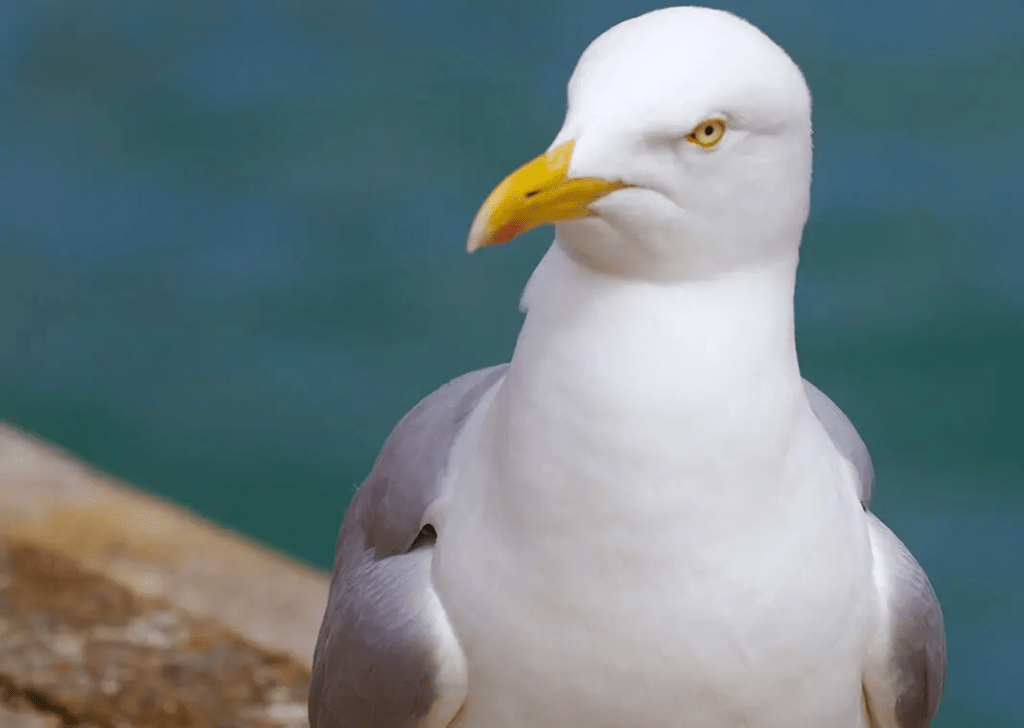
More importantly, Eric Clayton has already written that essay, in a beautiful post from Ireland called “The Man Who Untangles Seagulls.” Different coast, different bird, but a similar (amateur) rescue, which led Eric to muse about our call to show up in the moment and respond as best we’re able. Click the image below to read it!
May you reap the blessings of attentiveness, this Advent and always!
 Christine Marie Eberle
You have outdone yourself with this Pelican post/meditation, Christine.
LikeLike