

‘Tis the season . . . for curated book lists! Here’s my quirky annual contribution, with just two rules: I have to 1) genuinely like the book and 2) know the author personally (enough to have had a conversation).
If you’re shopping online (I’m looking at you, Cyber Monday), I beg of you, GET NOT YOUR BOOKS FROM AMAZON. Local independent bookstores need our December dollars! If you don’t have one near you, try Bookshop.org, where you can indicate which local indie your purchase will support, or Barnes & Noble, a bona fide brick-and-mortar chain.
And if you want to gift any of my books for Christmas, just email me and I’ll move heaven and earth to get personalized, signed copies to you or your chosen recipients.
Enough said. Here’s the 2025 edition of Books I Love by People I Love:

Lilli de Jong: A Novel, by Janet Benton
Janet is a Philadelphia-based writing coach. Her debut novel, set among Quakers in Germantown in the late 1800’s, follows the travails of an unwed mother forced to make her way in the world in the face of heartbreaking poverty and prejudice. GIFT THIS TO anyone who enjoys a compelling, immersive read.

If I Loved You, I Would Tell You This,
Short Stories by Robin Black
Robin is a local author I met years ago when Lynn Rosen hosted a discussion of Robin’s novel Life Drawing (which I also recommend). Wanting to read more, I discovered her marvelous book of short stories. Fun fact: last year, I ran into Robin at an Authors Guild happy hour and fan-girled her so hard it might have freaked her out a bit. GIFT THIS TO anyone who needs their exquisite writing in small doses.

Finding Peace Here & Now: How Ignatian Spirituality Leads Us to Healing and Wholeness, by Eric A. Clayton
The fun and prolific Eric Clayton released his third book this year, and I got to review it for the National Catholic Reporter. It’s not enough to wring our hands and pray for peace, Eric insists. “If peace is what we desire, then we need to practice it.” A generous writer, Eric provides many helpful suggestions for how to practice peace within ourselves so that we can extend it to others. GIFT THIS TO anyone who doesn’t like what today’s political climate is doing to their blood pressure.
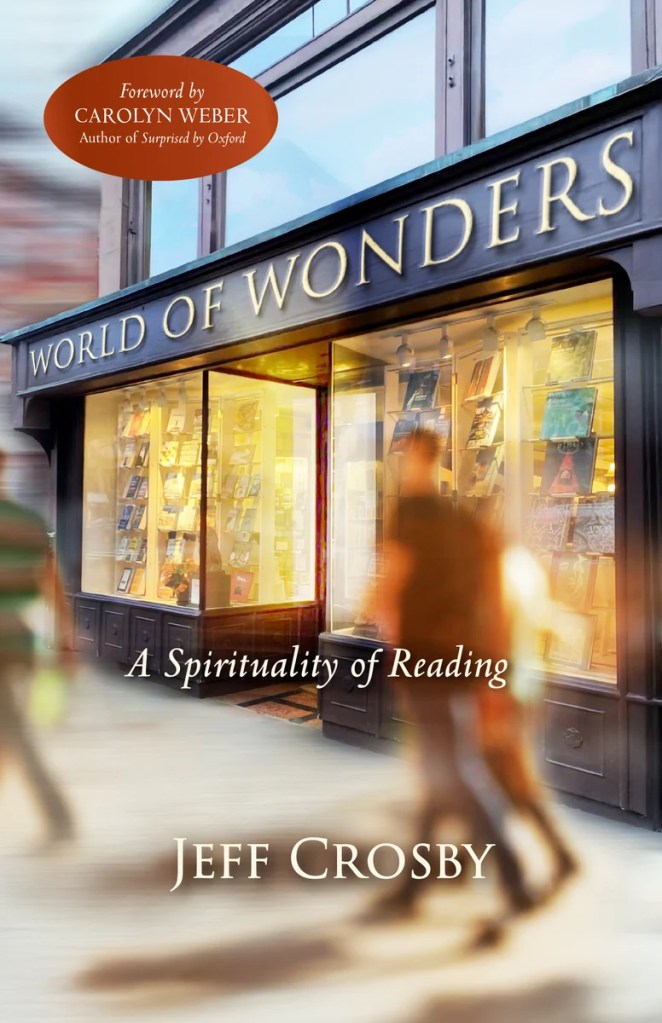
World of Wonders: A Spirituality of Reading, by Jeff Crosby
Jeff (with whom I’ve enjoyed an epistolary friendship for several years) has written an intriguing memoir chronicling the intersection of his faith and his reading, including the evolution of his relationship with Scripture, poetry, and fiction. He identifies literature that has nourished him in various seasons of life, and provides carefully curated lists of works he has found helpful and we might too. GIFT THIS TO anyone who’d like 174 MORE book recommendations (I’m not even kidding) to enrich their spiritual life.

Common Ground: How the Crisis of the Earth is Saving Us from Our Illusion of Separation, by Eileen Flanagan
Eileen is a good friend, and I’ve had the privilege of reading parts of this book in draft form ever since we went to the When Words Count retreat together in 2017. Common Ground takes readers on a journey to places where environmental disasters are being exacerbated by corporate interests and dishonesty. Yet this is not a “doom and gloom” book; Eileen interviews climate activists, spiritual leaders, and ordinary, warm-hearted citizens, all working together to banish our “illusion of separation” from one another and from the earth that gives us life. GIFT THIS TO anyone who wants to be better equipped to talk persuasively about the crisis facing our planet.

Together Through Reflection: Themes for Those Who Lead and Serve in Catholic Organizations, by Bridget Deegan-Krause
For decades, Bridget has worked to equip mission-focused leaders for service. Designed as a resource for faith-based leaders to use with their teams, this accessible guide offers practical direction for producing an effective and prayerful reflection experience. (Now, there’s a book I wish I’d had during my years in campus ministry!) GIFT THIS TO anyone who works for a Catholic institution—especially if they are in a leadership role.

The Soul Also Keeps the Score: A Trauma-Informed Companion to the Spiritual Exercises of Saint Ignatius, by Robert W. McChesney, SJ
Convinced by decades of work with traumatized individuals that a siloed approach to care undermines holistic recovery, my friend Rob brings spiritual and psychological insights to the table and insists that they have a conversation. The Soul Also Keeps the Score is part color commentary on the life and legacy of soul-wounded swashbuckler-turned-saint Ignatius of Loyola, part deep dive into cutting-edge research in trauma studies. In it, Rob navigates the turbulent waters among disciplines in the service of that most Ignatian of goals: to help souls. GIFT THIS TO anyone frustrated by the divide between psychology and religion. Bonus: Rob and I have begun offering retreats together; we’ll be at Cranaleith (Philadelphia) in January and Bellarmine (Chicago) in March!
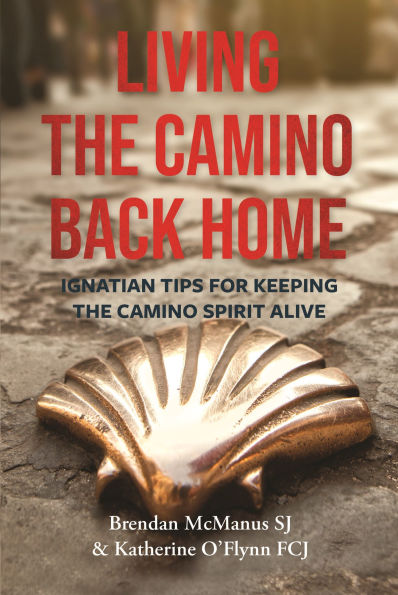
Living the Camino Back Home: Ignatian Tips for Keeping the Camino Spirit Alive, by Brendan McManus, SJ
I first encountered Brendan through his wonderful book about the Ignatian Camino called The Way to Manresa, later discovering that most of his books have to do with the Camino de Santiago (Way of St. James). Based in Dublin, he spends time in Spain each summer, supporting pilgrims through the Camino Companions program. This little gem of a book provides valuable insight on how to sustain the transformative effects of a pilgrimage in everyday life. GIFT THIS TO anyone who returned from a pilgrimage asking, “Now what?”
Jesus Before God: The Prayer Life of the Historical Jesus, by Hal Taussig
In the late 90’s, I had the amazing experience of taking a few of Hal’s graduate classes at Chestnut Hill College. A Methodist minister and Scripture scholar, Hal opened the Bible for me like no one before or since. This imaginative portrait of Jesus at prayer is a palate-cleanser of a book, readying us for a fresh encounter with God. (Note: it may be out of print, but gently-used copies abound!) GIFT THIS TO anyone who’s intrigued by the notion of a “historical” Jesus.
That’s it for this year, friends. For more ideas, check out 2024 and 2023.



 Christine Marie Eberle