Scripture, Spirituality, Writing

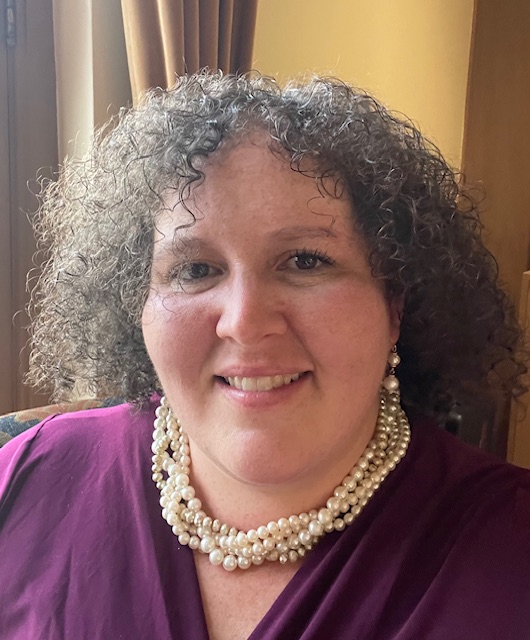
Cameron Bellm

Part of the Thankful Thursday Series

I met Cameron in the summer of 2023 at my first Ignatian Creators Summit (a truly cool undertaking of the Jesuit Media Lab). I was a nervous newcomer, but she quickly put me at ease with her welcoming spirit, quirky sense of humor, and undergraduate major even less practical than my own: Russian Literature!

Cameron Bellm: Attention and Astonishment

In classic Ignatian fashion, Cameron describes herself as a contemplative in action. She’s a writer and speaker based in Seattle, where she and her husband are raising two cutie-pie little boys. In 2020, she had the internet version of fifteen-minutes-of-fame when her Prayer for a Pandemic went viral. (Just for fun, Google that and see how many places it was shared!) Here’s the beautiful original and a 2022 follow-up, which contains my favorite line: “Above all, as we gaze upon our frayed social fabric / may we who have spare threads set to weaving.”

As we gaze upon our frayed social fabric,
may we who have spare threads set to weaving.”

Formed by both Ignatian spirituality and Catholic Social Teaching, Cameron has written several devotionals over the years. She is now hard at work wrapping up the manuscript of a book that will be published by Eerdmans in 2025:  The Sacrament of Paying Attention: Contemplative Practices for Restoring Sacred Human Communion.  She publishes a short weekly missive on Substack called “Attention and Astonishment,” which always includes thought-provoking nuggets. (The title is a shout-out to a line from “Sometimes” by Mary Oliver):

Instructions for living a life:
Pay attention.
Be astonished.
Tell about it.

Indeed, Cameron’s attention to—and ability to be astonished by—both the big and little things in life is one of her many endearing / enduring qualities.

Here’s what she said about Finding God Along the Way“What a delight it is to journey along the Ignatian Camino with Christine Eberle as our wise and thoughtful guide! Scripture, story, and Ignatian principles are woven together in a meditative and inspiring guide not only for those making a literal pilgrimage, but for all of us who lace up our shoes each morning to walk through the holy and challenging terrain of our own lives.”

For people you can see once a year for forty-eight hours yet still rejoice like Elizabeth greeting Mary the next time you meet, I am truly grateful!

Spirituality, Writing

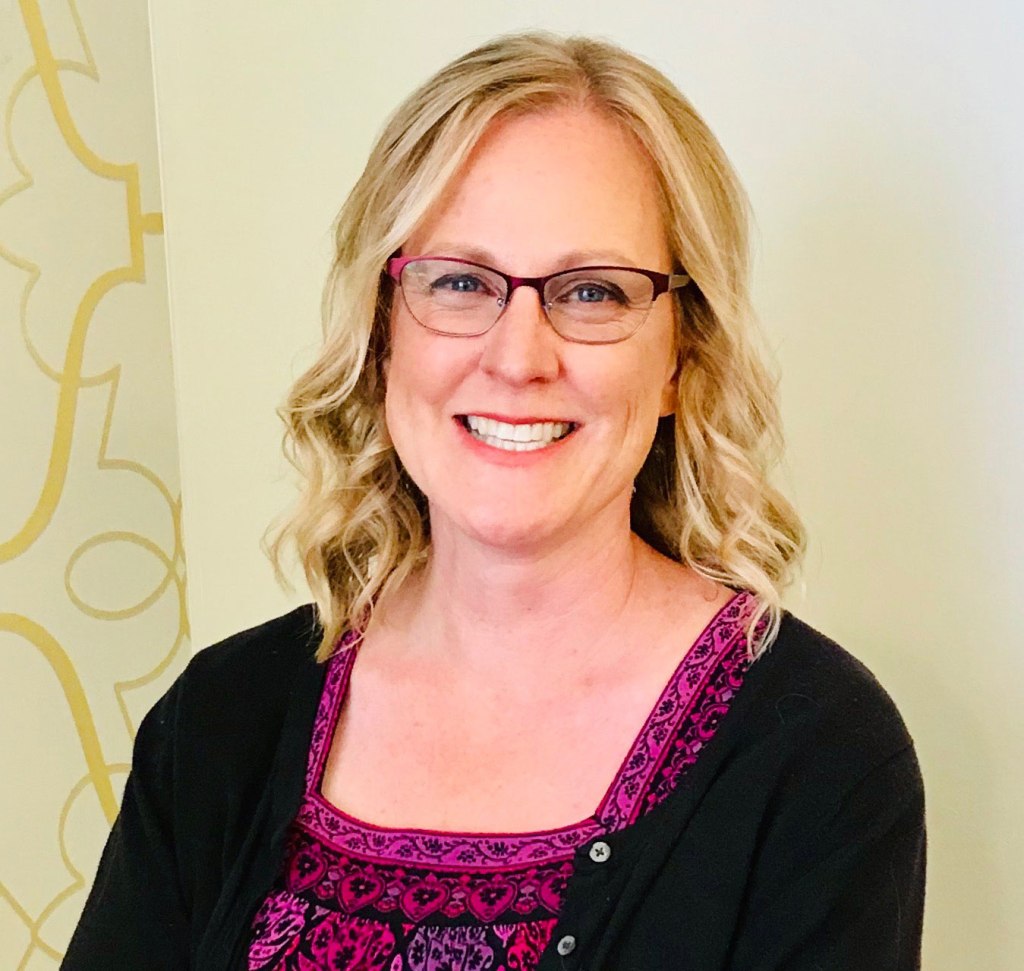
Elizabeth Grace Matthew

Part of the Thankful Thursday Series

“Great stories are all the same beneath the splendid array of differences that makes each one unique. The answers (whom to kill, whom to marry, how to cope) are specific to the place, the time, the characters, and the circumstances. But the questions (Who am I? What is my life about? What is my legacy?) that necessitate those answers are universal to the human condition.”

For years, I’ve been quoting this snippet from Elizabeth Grace Matthew during my retreat / keynote called “The Stories that Form Us”—explaining that I encountered it in an America magazine review of the Sex and the City reboot, of all things.  After encouraging people to brainstorm their favorite childhood books or current television series on streaming loops, I ask, “What questions—universal to the human condition—do they address?”

Elizabeth Grace Matthew

A few years ago, at a grade-school faculty retreat not far from my home, a teacher rushed up to me after the session. “Liz Matthew is a friend of mine! Do you want to meet her? I think you’d really like each other!”

It had never occurred to me that a writer I’d read in the Jesuit Review (note reverent tone) would be a mom who lived one town over from me—friendly and funny and fond of our local coffee shop. We met there and hit it off at once, chatting about writing and editing and creative-life balance, right to the outer limit of her childcare.

Several times since then, I’ve found myself sufficiently struck by the quality of writing in an America article to flip back to the beginning and see who wrote it, only to discover Liz’s name again.  (You can check out her articles here.) In addition to writing for many other publications, this mother of four boys is busy working on a book about Little Women and feminism. Sign me up!

It had never occurred to me that a writer I’d read in the Jesuit Review would be a mom who lived one town over from me—friendly and funny and fond of our local coffee shop.

While juggling all that, she made time to read my manuscript and had this to say:  “With humor and insight, Christine Eberle invites us to tag along from afar on her Ignatian Camino. At first glance, this is a book about how extraordinary circumstances super-charged one woman’s spiritual growth. Dig deeper, and it’s really about how ordinary life can also reveal our own opportunities to grow with God. Eberle gives us the context and the questions to better understand our own journeys, and where to look for those opportunities, through the evocative lens of Ignatian spirituality.”

For the serendipity that precedes the exclamation “How have we never met?” and the delight of discussing shared passions, I am truly thankful!

Spirituality, Travel, Writing

Katie (Haseltine) Mullin

Part of the Thankful Thursday Series

During my pilgrimage, one of the practices that sustained me was the Ignatian daily Examen. Even though Ignatius said the prayer should take no longer than fifteen minutes, on the Camino I sometimes devoted up to an hour, wringing every drop of grace from the previous day. Walking through the steps of gratitude, light, rumination, contrition, and hope each morning helped me view my experience through a spiritual lens instead of getting stuck on the physical level. Therefore, when it came time to seek endorsements, Katie (Haseltine) Mullin was at the top of my list of “ambitious asks.” I didn’t know her personally, but had loved her book, All The Things: A 30-Day Guide to Experiencing God’s Presence in the Prayer of Examen. 

Katie came to the Examen as an outsider—an evangelical Christian who found “breathing room” in a Protestant liturgical church where she began receiving spiritual direction, eventually becoming a spiritual director herself. This renders her writing direct and accessible. She’s not parroting insider terminology as someone who grew up in the Jesuit soup might do. Instead, she serves as a translator—a teacher of “Ignatian for Speakers of Other Spiritualities.” As she approaches the Examen from thirty different starting points, she is beautifully clear: this prayer is not a hurdle to be cleared or a set of boxes to be checked, but a golden opportunity to draw close to the God who loves us by rummaging backwards through our days together. Each chapter includes a personal, practical example of how using a particular angle of approach led her to notice something she might otherwise have missed, and thus to grow in friendship with God.

This prayer is not a hurdle to be cleared or a set of boxes to be checked, but a golden opportunity to draw close to the God who loves us by rummaging backwards through our days together.”

In addition to being a writer and spiritual director, Katie offers a variety of coaching services around both the Enneagram and self-care, all in the service of helping people live the lives they’ve been given with hope and purpose. She also works with the Center for the Formation of Justice and Peace. You can learn more about her many hats here on her website.

Katie had such lovely things to say about my book: “Christine Marie Eberle’s Finding God Along the Way felt like an unexpected, long catch up with your best friend on a Sunday afternoon. I found myself in tears as I read the beginning question, ‘Do you want to take a walk with me?’ and they came often as I read in the pages so many relatable struggles wrapped in countless encouraging words and prayers. As a lover of all things Ignatius, I imagined enjoying this book. Spiritual exercises? Yes, please. The Examen? Of course. What I didn’t count on was having my soul respond with such “serenity” (something the author herself found on the pilgrimage) to reading the familiar language and understanding of how I see God. I also I found myself challenged to pray for others on my daily walks with a deeper commitment and to notice the vulnerable in and around me. You don’t have to walk the Camino (though it remains my top bucket list item!) to go on a meaningful journey with Christine and her friends. St. Ignatius wrote in the First Principle, ‘All the things in this world are gifts from God,’ and Christine’s recollections and reflections on her pilgrimage were an incredible gift to me–one I will look back on and savor for its graces.”

As an unexpected grace, Katie and I decided that two women with a shared enthusiasm for the Examen, Ignatian spirituality, writing, and the Enneagram (we’re both Ones) might also enjoy one another.  At her initiative, we hopped on Zoom and shared a marvelous getting-to-know you hour and have stayed in touch ever since.

For the gifts of serendipitous friendship and mutual delights, I am truly grateful!

Uncategorized

Ann Garrido

Part of the Thankful Thursdays Series

I can’t remember when I first heard Ann Garrido’s name, but it may have been when an Ave Maria Press catalog landed on my desk, advertising a little book called Redeeming Administration: Twelve Spiritual Habits for Catholic Leaders. I ordered it at once and benefitted immediately from Ann’s fluent integration of prayer and practice, delivered in bite-sized, memorable concepts. My takeaways included things like (and here I paraphrase): The administrator’s job is to create an environment where everyone on the staff can thrive and Do what only you can do . . . in the service of which, make sure everyone knows how to change the toner in the copier!

Ann Garrido: Educator, Writer, Preacher, Podcaster, and more!

When I was on the planning team for a gathering of campus ministers from Catholic colleges and universities, I jumped at the chance to invite Ann to speak and discovered that she is even more delightful in person. And get this cool day job: she’s an Associate Professor of Homiletics at the Aquinas Institute of Theology in St. Louis.  No wonder she speaks as well as she writes! 

Since then, I’ve come to love some of Ann’s other books. As a campus minister, I often used her Redeeming Conflict in student leadership workshops. I still try to practice its principles, such as maintaining an awareness of the difference between intent and impact as well as approaching potential conflicts with curiosity and a presumption of goodwill.  But my favorite is Preaching to the Choir, a collection of forty selections of her preaching with the Aquinas Institute community. Not only are her reflections powerful, but they illustrate the potency of breaking open the Word in a setting where we know and are known by the congregation. (Ann also has contributed to Catholic Women Preach, so you experience her there.)

Ann’s reflections illustrate the potency of breaking open the Word in a setting where we know and are known by the congregation.”

From reading Ann’s monthly newsletter, I know that—in addition to her teaching, writing, and postcasting work—she maintains a busy travel schedule, giving talks and workshops across the county.  For my campus ministry peeps, here’s an exciting virtual event coming October 3: a CCMA symposium on “Embracing the Spirituality of Administration.” Check it out!

Ann has been a gracious mentor of my writing career for many years. I remember a long conversation when I was working on my first book, in which she talked me through some of the nuances of the publishing industry. I’ve circled back to her for advice and endorsements several times since then, and she has been beautifully responsive.

Here’s what she had to say about Finding God Along the Way: “Although I have never walked the Ignatian Camino, I feel as if I have reaped the benefits of doing so by reading Eberle’s spiritual travelogue of her pilgrimage. The questions she asks at the end of each reflection remind me that life is a pilgrimage and that whether I travel through Spain or my own backyard, it is the same God who is leading the way.”

For Ann Garrido’s commitment to excellent preaching in the Church, and her encouragement of my own efforts to connect spirituality, Scripture, and everyday life, I am truly grateful.

Uncategorized

Let’s Not Burn It Down

In the spring of first grade, I was pulled out of class one day to attend First Communion practice. A second-grader was absent, which would throw off the pew location of every girl behind her in line. (The boys were on the other side of the aisle). To avoid that, the good (IHM) sisters chose me as a seat-filler.

I remember only two things about that day. The second always makes me smile: how momentarily thrilled my mother was when I told her all about it over milk and cookies that afternoon. Had the sisters recognized how spiritually precocious I was, and decided I should skip a grade, sacramentally? (Oh, Mom . . . I love how you loved me.)

The first is something I still recall at almost every Mass, more than half a century later. The line the children were memorizing that day was “May the Lord accept the sacrifice at your hands, for the praise and glory of His name, for our good and the good of all His holy Church.”

I’m guessing most Catholics rarely think about that line (beyond, perhaps, slaloming around the male language for God). It riveted me, however—because I misunderstood it. At six years old, my sense of “Church” was limited to the physical edifice—the wonder of marble and stone that was St. Alice’s in Upper Darby. That day, and for the next few years, I believed we prayed “for the good of all His holy Church” so that the building would not burn down. (Whether this caused or was caused by my childhood terror of fire, I do not know.)

I found myself thinking about that misunderstanding during Mass yesterday morning in light of a conversation I’d had with my friend Eileen Flanagan on Saturday night about risk factors for political violence. (Sorry, that was an abrupt pivot; I should have warned you to fasten your seatbelt!)

My parish is relatively homogenous, politically; maybe your is, too (if you have a parish). Or maybe you worship in a place that is more representative of our nation: well-meaning people passionately committed to opposing parties. The divide across that aisle can feel cavernous. I remember a time when people could hotly debate political topics over appetizers then enjoy a convivial dinner together. No more. We may avoid the subjects that divide us, but more likely we avoid the people.

And this is where the good of all God’s holy Church comes in. There’s more than one way to burn a thing down.

So, back to those risk factors. Apparently there are three: 1) a recent history of election-related violence, 2) scapegoating / blaming / fear mongering on the part of one or both sides and 3) mistrust of election results. While there’s nothing we can do about our appalling recent history (attempts at both insurrection and assassination, with threats to poll workers in between), there is plenty we can do about numbers two and three.

Scapegoating / Blaming / Fear Mongering
Let me say this clearly: we can not control how other people speak. We can only control how we speak—to and about other people. Scripture is full of good advice in this regard. “Let everyone be quick to listen, slow to speak, slow to anger; for your anger does not produce God’s righteousness” (James 1:19-20). Or this: “Should anyone ask you the reason for this hope of yours, be ever-ready to reply, but speak gently and respectfully” (1 Peter 3:15-16).

This weekend, I had a gentle, respectful email exchange with someone whose partisan convictions differ sharply from my own, which made me realize how rarely I have any conversation at all with people “on the other side.” I was grateful for the relationship-preserving graciousness. When such opportunities arise, we should remember that “flamethrower” language never convinces anyone of anything. Even when we are speaking to those in total agreement, colorful demonizing is entertaining, but does not contribute to the building up of the common good.

As Scripture says, “Those who guard mouth and tongue guard themselves from trouble” (Proverbs 21:23). This doesn’t mean we shouldn’t speak about important topics—far from it. But we need to be deeply mindful of how we speak.

Not Trusting Election Results.
On this, I’ll be briefer. If you are are skeptical about election integrity, come watch the sausage be made. As a poll worker, I see firsthand the care with which each voter and vote is handled, and the extensive training we go through, twice a year, to ensure it. Of course, this does not eliminate systemic threats, like rules that make it harder for every person to vote and the electoral college system that makes it harder for every vote to count. But if you are skeptical about the process itself, please know that—before, during, and after election day, on the ground, district by district—more than half a million of your fellow citizens are hard at work preserving your right to cast your ballot. Be kind to them!

. . . be ever-ready to reply, but speak gently and respectfully.”

A commitment to civil discourse is vital for the good of “all God’s holy Church” . . . or whatever body you call home. These communities—vital to our well-being—are going to be around long after this election, this presidency, this decade. Peacemaking begins at home.

Let’s not burn it down.